Bill Mauldin – Cartoonist in WWII

Humor is the best medicine, relieving tension and anxiety, especially for soldiers at war. As a GI himself, Bill Mauldin understood that. His cartoons tickled the funny-bones of the dogfaces across Europe and those back home during WWII.

Up Front Book Cover
Up Front Book Cover

While serving in the 45th Division in Italy, Bill Mauldin drew cartoons for the “45 Division News.” He was so well liked that it wasn’t long before he became a regular feature in the “Stars and Stripes” (the official Army newspaper). Mauldin’s depiction of the American GI as disheveled, unshaven and disrespectful drew General Patton’s wrath. But Patton’s disapproval couldn’t compete with Bill’s popularity with the troops.

Willie and Joe populated most of Bill’s cartoons. These tired, dirty, bearded GI’s viewed the war from the bottom – be it a mud-filled fox hole or a bombed-out town. Bill often ruffled feathers with his irreverent humor, but it was just what the men needed as they slugged their way through Naples, Anzio, Cassino, Rome and the Italian mountains. Bill’s cartoons rang so true to the enlisted men loved him. So much so that his cartoons were syndicated in papers back in the states and by 1945 Bill published his first book, “Up Front.” For his cartooning talent Bill Mauldin was awarded his first of two Pulitzer Prizes at only 23 years old.

Willie and Joe Book Cover

“Up Front” is a compilation of cartoons Bill drew for “Stars and Stripes” accompanied by Bill’s narrative of his experiences during the war. Rather than an account of where he was and what he did, Bill vividly described what life was like for a rifleman or dogface, as he called them. He also gives background information for some of his drawings. Most of Bill’s cartoons were set in Italy and Southern France where he served most of his time. And, yes, Bill did fight. His cartooning began as a one afternoon a week assignment. The rest of the time he was one of the suffering dogfaces fighting the war.

Bill Mauldin's Army Book Cover
Bill Mauldin’s Army Book Cover

A couple of quotes from “Up Front” will illustrate some of Bill’s thoughts and ideas.

“I’m convinced that the infantry is the group in the army which gives more and gets less than anybody else. I draw pictures for and about the dogfaces because I know what their life is like and I understand their gripes. They don’t get fancy pay, they know their food is the worst in the army because you can’t whip up lemon pies or even hot soup at the front, and they know how much of a burden they bear.”

“Mud, for one, is a curse which seems to save itself for war. I’m sure Europe never got this muddy during peacetime. I’m equally sure that no mud in the world is so deep or sticky or wet as European mud. It doesn’t even have an honest color like ordinary mud.”

Here’s Bill’s suggestion for understanding an infantryman’s life – at least a little, as stated in “Up Front.”

“Dig a hole in your back yard while it is raining. Sit in the hole until the water climbs up around your ankles. Pour cold mud down your shirt collar. Sit there for forty-eight hours, and, so there is no danger of your dozing off, imagine that a guy is sneaking around waiting for a chance to club you on the head or set your house on fire. Get out of the hole, fill a suitcase full of rocks, pick it up, put a shotgun in your other hand, and walk on the muddiest road you can find. Fall flat on your face every few minutes as you imagine big meteors streaking down to sock you. After ten or twelve miles (remember you are still carrying the shotgun and suitcase) start sneaking through wet brush. Imagine that somebody has booby-trapped your route with rattlesnakes which will bite you if you step on them. Give some friend a rifle and have him blast in your direction once and a while. Snoop around until you find a bull. Try to figure out a way to sneak around him without letting him see you. When he does see you, run like hell all the way back to your hole in the back yard, drop the suitcase and shotgun, and get in.”

My father was a Bill Mauldin fan and he treasured his copy of “Up Front.” I have my father’s book and a couple of years ago one of my grandsons picked it up and started reading. He loved it. I immediately bought him a copy for his very own. (The one I have is a first edition and would not stand up to much handling.) I’m told that my grandson often carries the book with him to read when he has a little spare time. It pleases me that I have furthered his interest in World War II history.

In researching I found several sites with more information about Bill Mauldin. Much as I would like to post some of his cartoons on my website, I don’t want to violate any copyrights so the images posted here are covers for books available on Amazon and other online book sellers.  I have also provided links to sites where you can see a few of his cartoons.

The 45th Division museum has a large collection of Bill Mauldin’s original cartoons. Their website is at http://www.45thdivisionmuseum.com/Exhibits/Mauldin.html

Other websites with information about Bill Mauldin, his life and his cartoons are listed below.

http://billmauldin.com/

http://www.loc.gov/rr/print/swann/mauldin/

This site shows Bill in the movie “Red Badge of Courage” with Audie Murphy. http://www.imdb.com/name/nm0560887/

http://www.encyclopedia.com/topic/Bill_Mauldin.aspx

“Letters From A Soldier” & Other Memoirs

When asked where I get my ideas for WWII love stories, I usually say that it started with stories told by my parents and other family members. From there my research has included lots of books, magazine articles, shows on TV, and even old movies. One of the best ways I have found to get into the period is to read memoirs. These personal accounts open a window into the life of an individual – telling his or her unique story. The Second World War affected every person living at the time. Some were drastically changed. Some went to places they had never even imagined. Others stayed home and watched their familiar world change around them. Every reference in later years was either “before the war” or “after the war.”

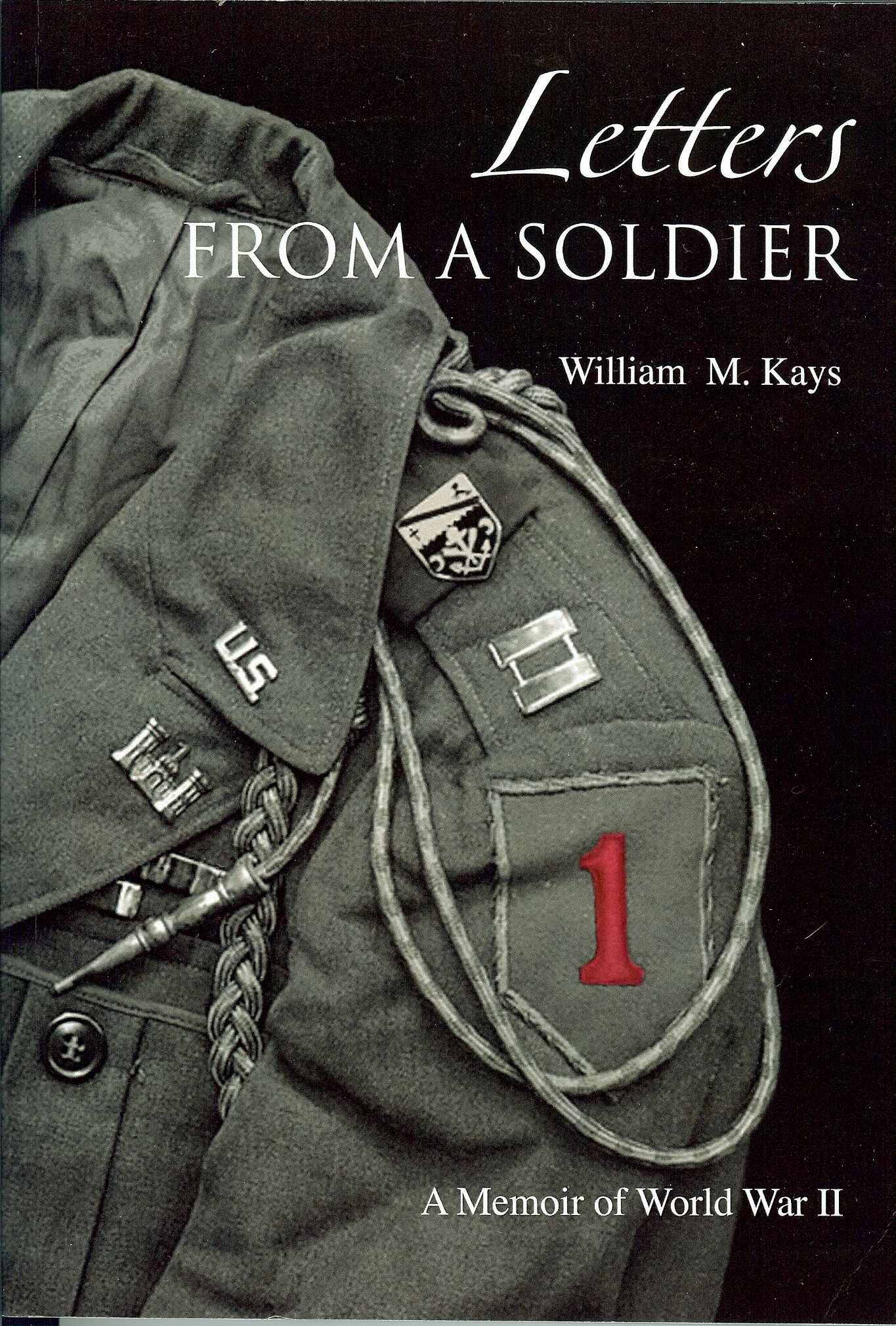
In researching my current novel-in-progress, I immersed myself in the mindset of the WWII soldier by reading memoirs of men who had similar experiences as my fictional character. After reading many memoirs as well as historical accounts, I have found that memoirs provide more insight into the personal experiences – from their daily activities to what they knew and felt about the war. Letters and journals written at the time convey the emotional state of the soldier. And they record the minor details of life, fertile soil for the fiction writer who wants to transport the reader into the world of WWII.Letters from a Soldier cover

Since I had already decided that my hero served in the First Infantry Division and was wounded soon after D-Day, I searched through the many memoirs available online for someone who served in the First in the early part of the war. I discovered “Letters from a Solider” by William M. Kays. The well-written account provides letters and pictures pulled together by the author’s vivid memories of the events, the people and the locations.

Bill Kays entered the Army as a Second Lieutenant after graduating from Stanford where he went through the Reserve Officer Training Corp (ROTC). Both his letters and his recollections of his early experiences in the Army convey just how ill-prepared the United States was for war. Many of the young officers came straight from college where their military training varied greatly. Others had gone through the Army’s Officer Training Schools (OCS) which were necessarily brief. Kays makes no bones about how incompetent he felt as he boarded the overcrowded Queen Elizabeth for England on August 30, 1942, only two short months after his induction. Once in England Kays was assigned to the First Infantry Division, which was already in England.  Despite the fact that he had no training in combat engineering, Kays became an officer in the 1st Engineering Battalion.

In “Letters from a Soldier” Kays provides a vivid account of training at Fort Leonard Wood, Missouri, of the voyage to England, and of his stay in England and Scotland before shipping out to North Africa. As a writer, his accounts gave me insight about how officers and enlisted men were trained and assigned to various units. In Kays case, he later figured out that in an attempt to get away from Fort Leonard Wood, where he was miserable, he had volunteered for overseas duty. So instead of getting him into another school for training, he landed on the fast track to overseas and combat.

Since I had read very little about the campaign in North Africa or the invasion of Sicily, Bill Kays’ book provided the background I wanted for my character. My story will pick up much later after the soldier is wounded, but I needed a back story. From Kays’ account I can piece together what my character experienced early in the war and how those experiences influenced him later.

The memoir provided details like how long it took for letters to get to the soldiers at various times and locations and that the soldier had to make a request in his letters so that civilians could send him packages for things as simple as cookies or wool socks. The letters also show how his concerns and interests changed over time with interest in what was going on back home dwindling. Vivid accounts of the weather, food, or lack thereof, and living conditions put the reader alongside the soldier. For instance, he gave descriptions of how mud infiltrated everything (yes, even in North Africa, it rains) or how they traded with the locals for eggs to supplement their bland diets.

Kays describes the invasion of Sicily as he watched it from shipboard since his regiment was held in reserve and went ashore later. He tells of watching the naval guns shoot down planes carrying our own airborne soldiers, presumably due to lack of communication between the Navy and the Army Air Corp. One of the many foul-ups during the war, yet one I had not heard before.

Later, Kays gives one of the best accounts of the D-Day landing on Omaha Beach I have ever read. Through his vivid memories the reader experiences the day with him.  As a combat engineering officer assigned to the 16th Regiment, he knew that the beach defenses should have been destroyed before the infantry landed. When he saw them intact, he believed the landing would fail and that they would all be killed. Yet he stepped off that landing craft onto the beach and fought to survive. Little did he know that in the next year he would fight his way across Europe – and live to tell about it.

Other memoirs on my shelf include “Roll Me Over” by Raymond Gantter, “If You Survive” by George Wilson, “A Soldier’s Journal” by David Rothbart, “Visions from a Foxhole” by William A Foley, Jr., “Our War for the World” by Brendan Phibbs, and “One Man’s War” by Tommy LaMore.  All these deal with the war against the Germans.

The war against Japan constituted a whole different experience and, while it was fought largely by the Navy and Marines, many forget that the Army played a big role. My uncle and several others from our small town in Tennessee spent the war in the South Pacific in the Army fighting the Japanese. So ideas are swirling for more stories.

Patton’s Prayer

Until the movie “Patton” came out in 1970, my husband refused to tell anyone his full name – unless it was absolutely necessary. His grandmother named her first grandson for General George S. Patton, Jr. who she credited for bringing her son home safe. But her grandson was never called George. Instead his middle name was shortened to “Pat.” And that’s the only name most people knew. All that changed when he saw the movie about his namesake. George C. Scott’s portrayal of the famous General George S. Patton, Jr. gave my husband a vivid image of the man whose name he shared. Now my husband proudly tells his full name and the story of how he came to be named for the General.

The movie was also the first we had heard of the famous prayer for good weather that General Patton ordered his chaplain to write. We thought it was a bit of Hollywood embellishment until later when my husband’s grandmother gave us the scrapbook she kept during the war. A little piece of paper was tucked in among the newspaper clippings, maps and ration books. Her son had mailed his copy of the prayer to her and she had kept it all those years.

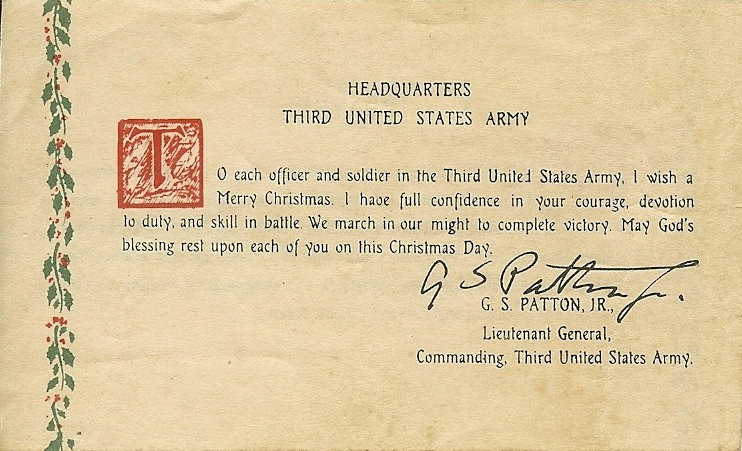
From my research on the web, Hollywood did use some literary license in how they presented the prayer in the movie. It was actually written before the Battle of the Bulge, not during the battle, and it was sent out to the men in Third Army as a Christmas greeting. Msgr. James H. O’Neill was Chaplain for Third Army and wrote the prayer at the direction of General Patton. The prayer, images of the card sent out and the story behind it can be found at more than one website, including the Official General Patton website.

The Prayer
The Prayer

As the prayer indicates, the weather was an important factor in the outcome of the war in Europe. Bad weather almost cancelled the D-Day invasion and added to the surprise of the Germans. Later a storm in the English Channel destroyed the Mulberry Harbour off Omaha Beach, yet the Allies continued to land men and supplies on the beaches for months after the initial landings. Rain stalled the Allies advance in the fall when they initially reached the German border. Rain and snow hid the build-up of German troops leading up to their counter-offensive known as the Battle of the Bulge. The winter of 1944-45 in Europe was colder than they had experienced for many years. Casualties from frostbite and trench foot were common. The ordeal that all the men in all the armies suffered that winter from exposure to the terrible weather added to the misery and desperation of the fighting and prolonged the war.  For the remainder of his life, my father-in-law kept the heat turned up and said he had promised himself he would never be cold again. It is hard for us to even imagine what they went through.

Patton's Christmas Greeting
Patton’s Christmas Greeting

My husband and I treasure his father’s copy of the prayer as a keepsake of his father’s service during World War II. It is a powerful prayer written in desperate times reflecting strong religious beliefs. I, for one, believe it was answered.

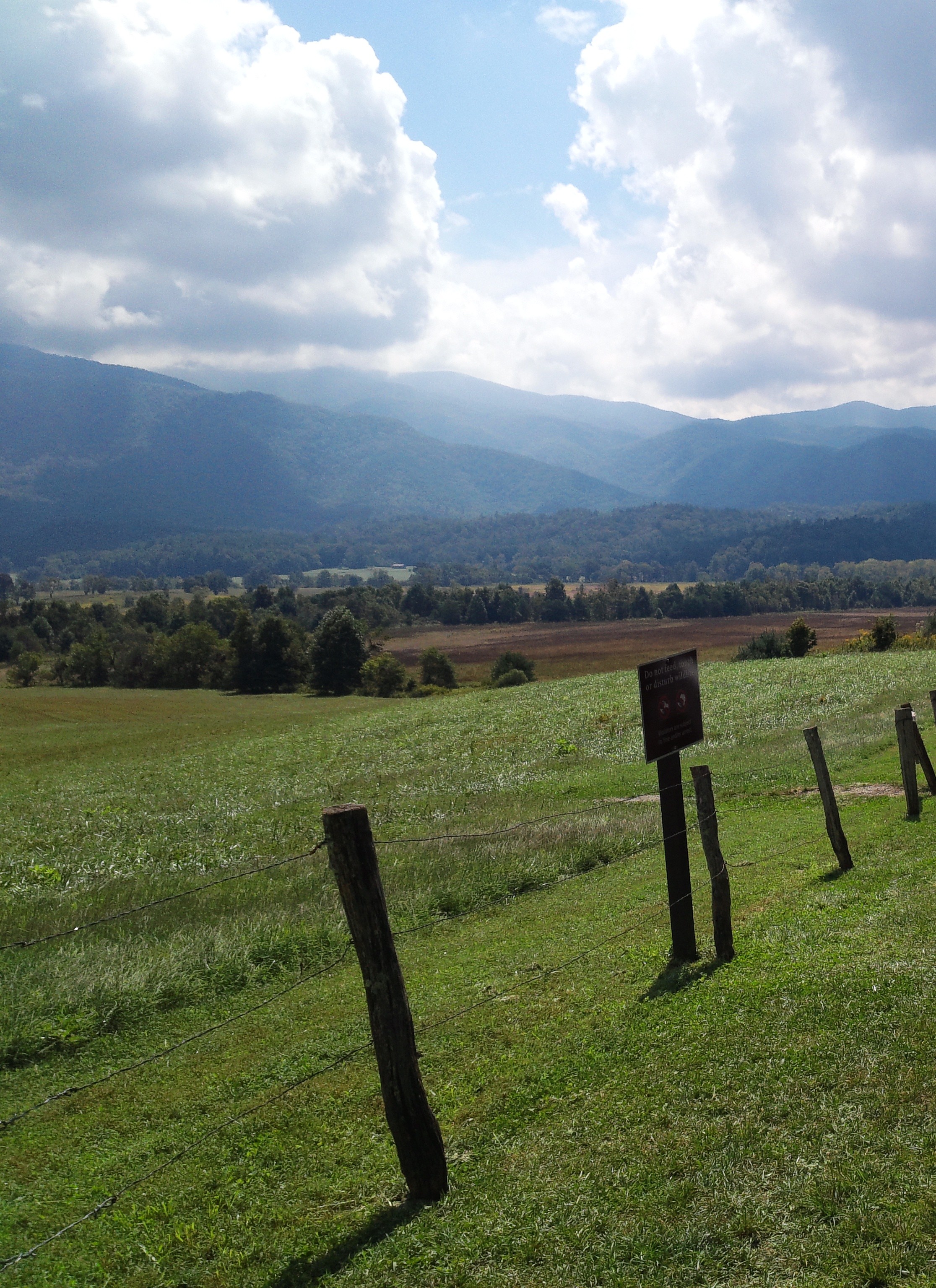
Great Smoky Mountains

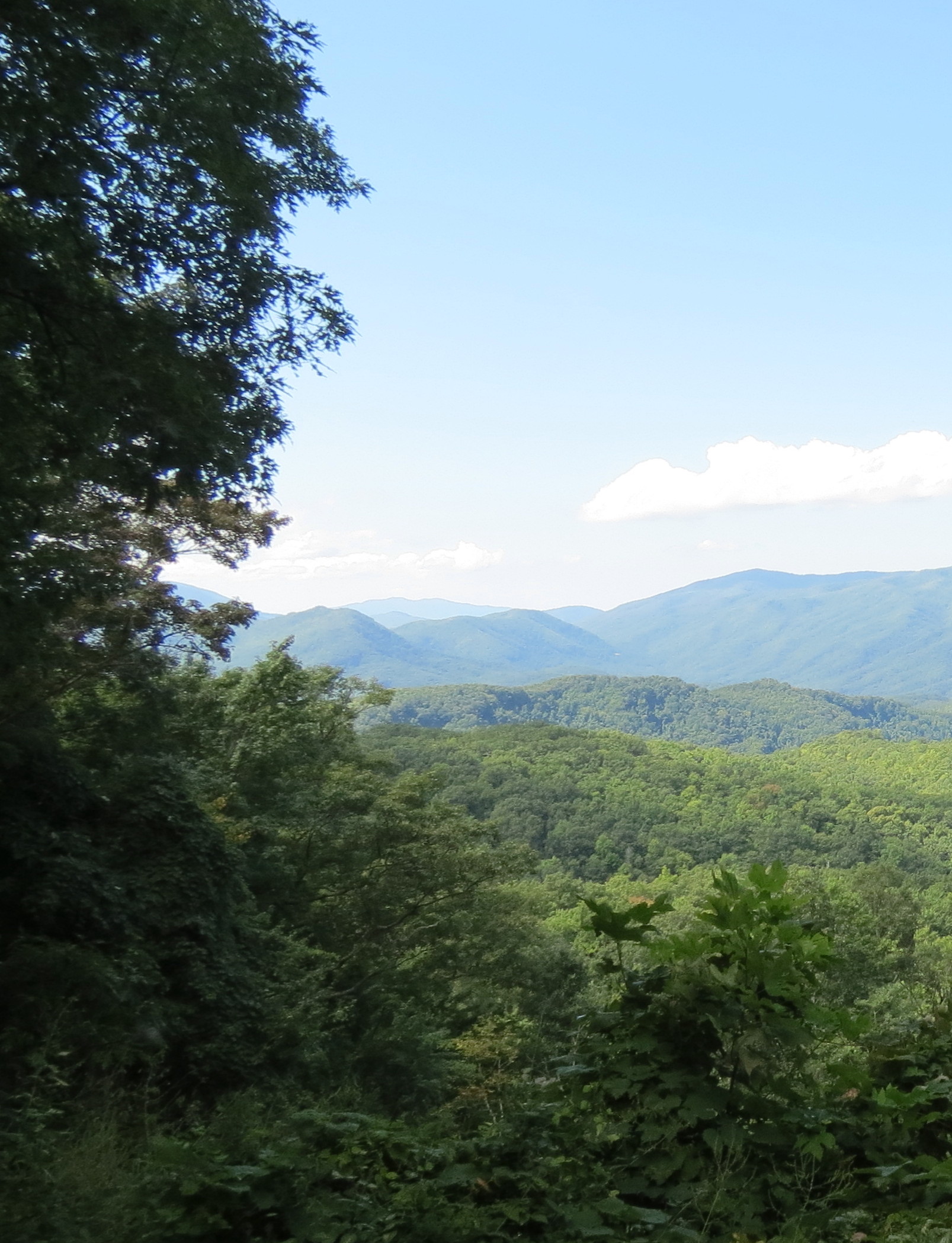
Not everyone who visits Gatlinburg or Pigeon Forge, Tennessee, goes into the Great Smoky Mountains National Park. They go to attend conventions, conferences or to just enjoy the many attractions in the area. But I contend that if they do not go into the park for at least a drive, they have really missed out on the whole reason for going to the mountains. In the park the sheer beauty of nature soothes the soul.  And man has only disturbed that beauty a little – to provide the public access to its wonders.Mountain View 1

Of course, driving through the park in bumper to bumper traffic is no fun. And these days, if you go in the summer or in October when the leaves are turning, the traffic is horrendous, or so I’m told. I haven’t been there during those congested times for many, many years. When you go, choose a less popular time, like September or May, if you can.Roaring Fork 3 Farm

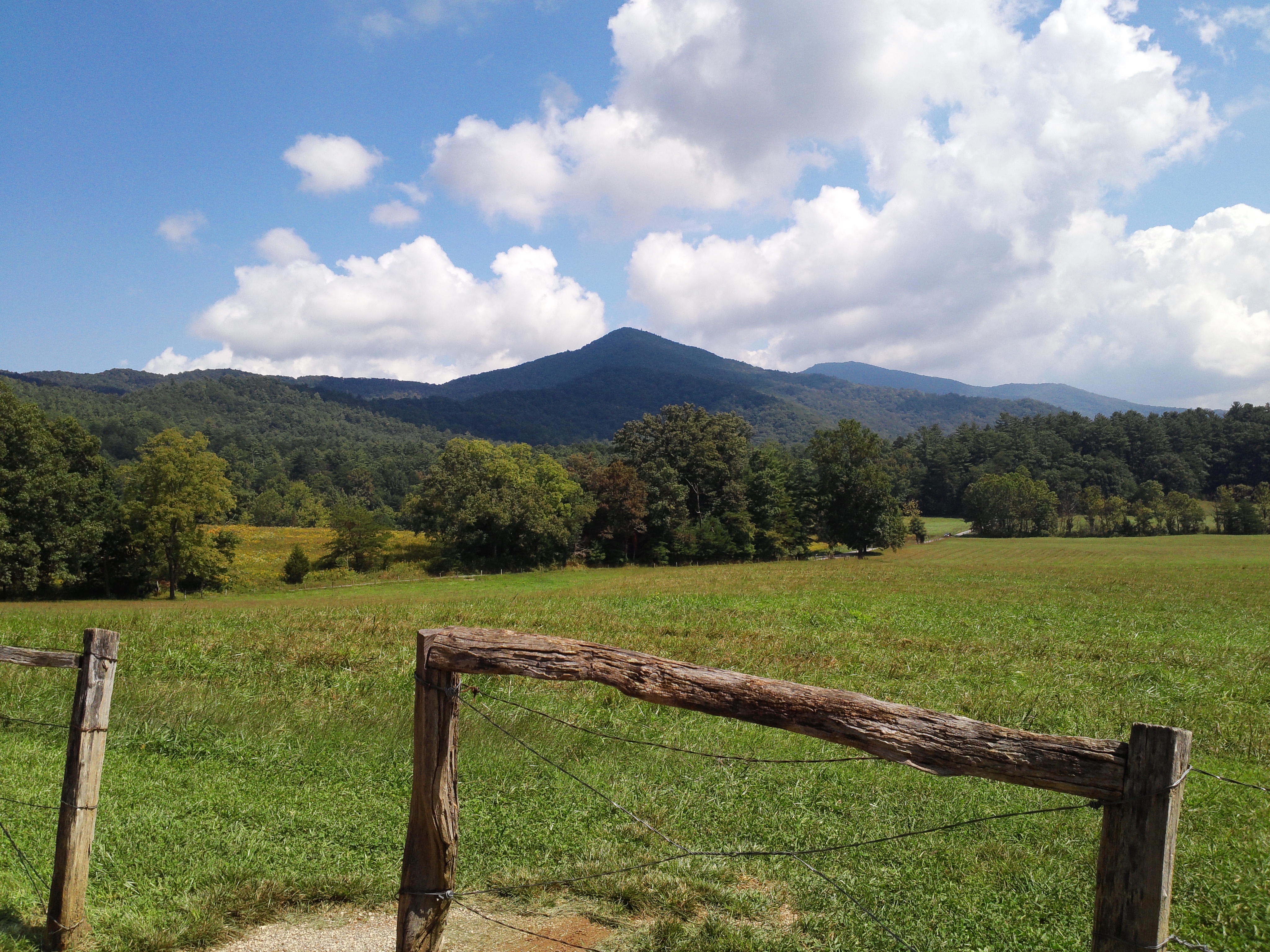
Our most recent visit to the Great Smokey Mountains was in September. The weather was gorgeous and the crowds thin. There was steady traffic on the drive from Gatlinburg to Cades Cove, but not enough to slow us down or interfere with our enjoyment of the drive. There were no big RV’s or semi’s to block the view. Along the way we pulled over more than once just to smell  the clean, damp air and soak up the peace and quiet.  A camera is a must-have – to capture the scenery and the memories.

Cades Cove
Cades Cove

On this visit we found a new-to-us drive through the park. A one-way loop above Gatlinburg that didn’t take too long to drive and provided some history of the area. Just turn at Red Light #8 (Yes, they number the lights to make giving directions easier) and head up Cherokee Orchard Road until it forks. Take the fork on the right. This leads to a one-way drive called  the Roaring Fork auto tour.IMG_0706

Along the tour we stopped at several points of interest. Some simply gave a view of the mountains.Roaring Fork 1

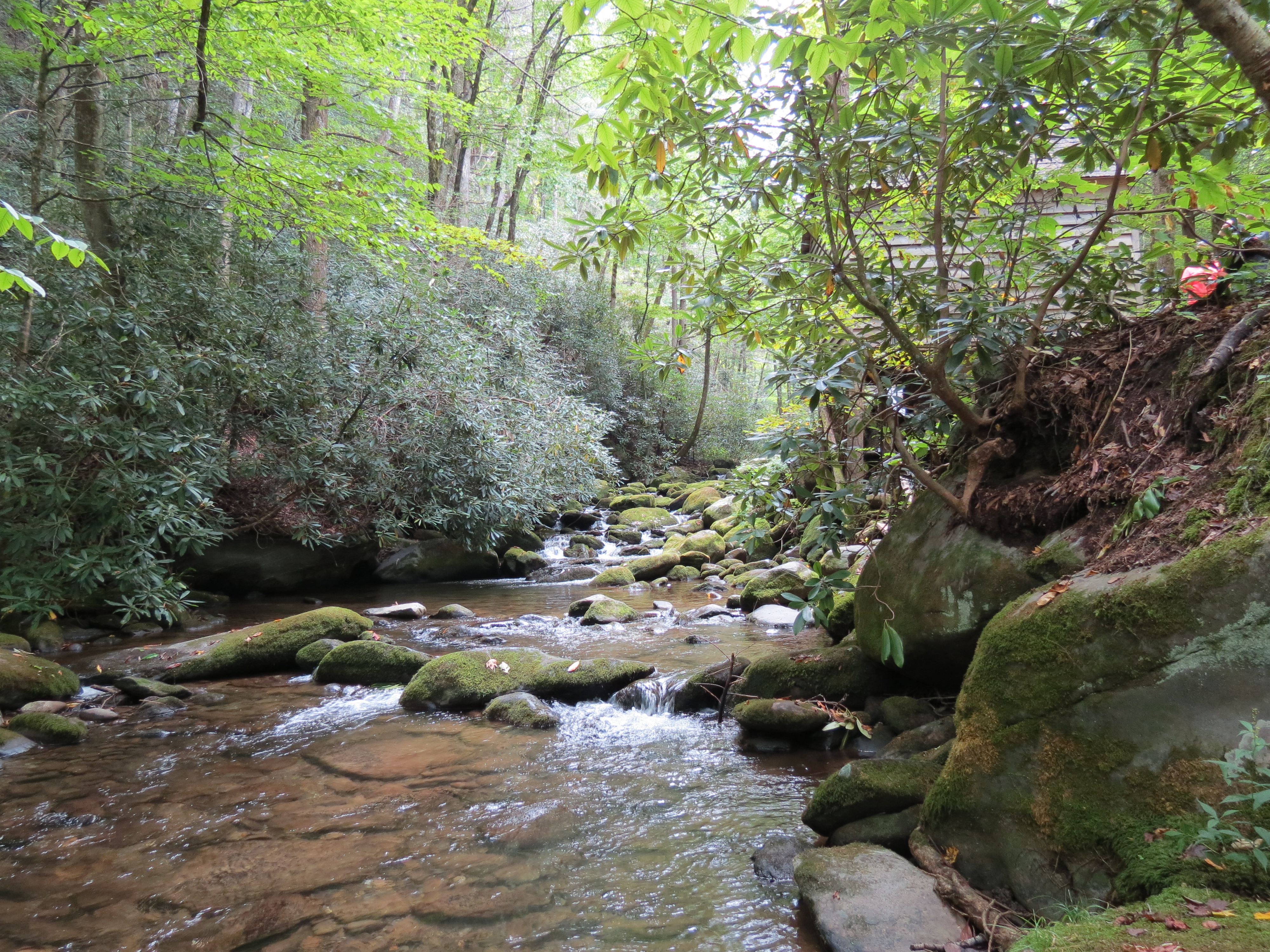
Some let us experience the forest, the ancient stones and the tumbling waters.IMG_0713

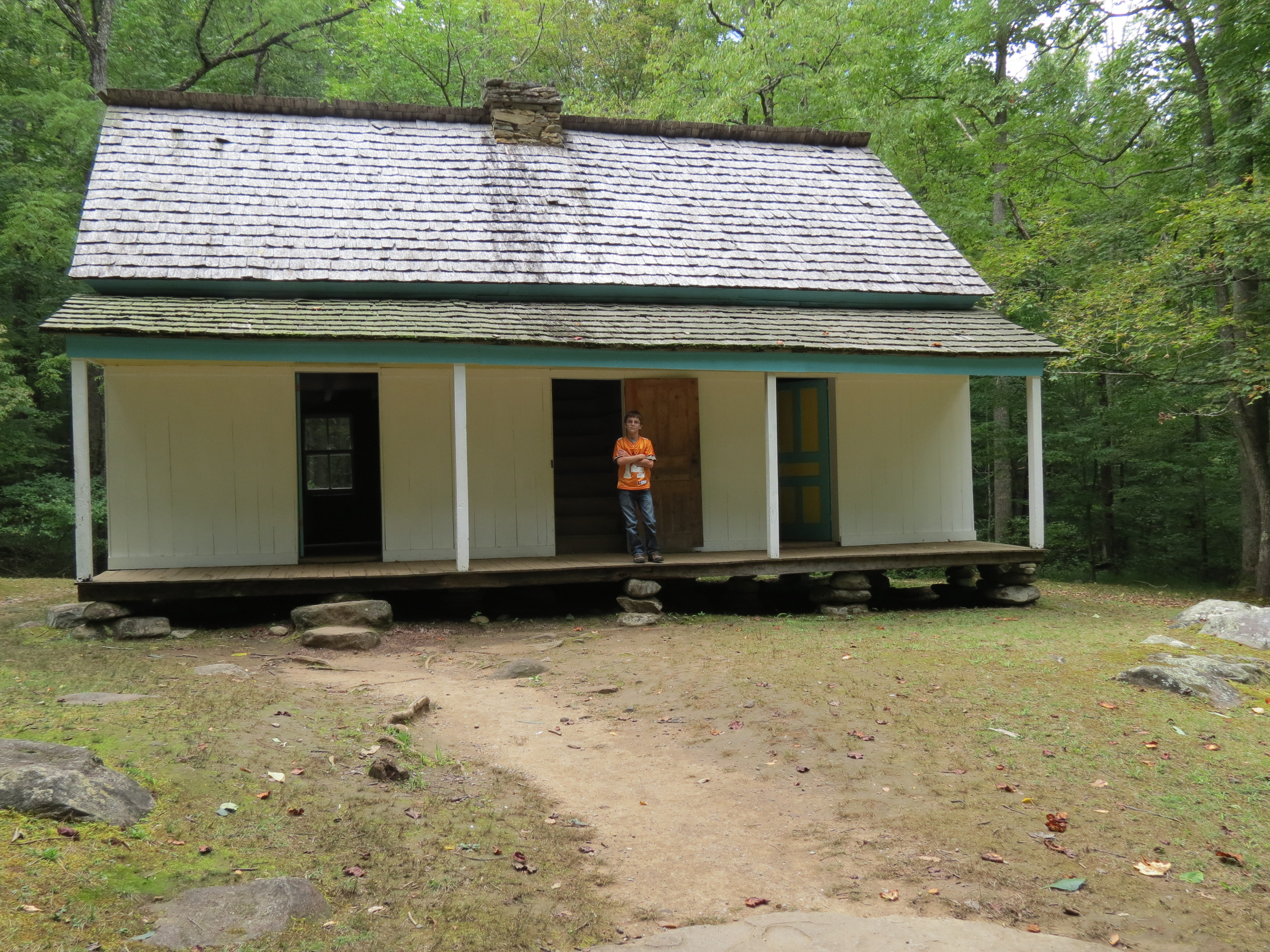
At other stops we glimpsed the primitive homes and difficult terrain where families struggled to make a living and raise their families. Ephraim and Minerva Bales raised nine children in a two-room log cabin.  They somehow found 30 acres of  land among the rocks that they could cultivate.

Ephraim Bales Farm
Ephraim Bales Farm

Alfred Reagan was an enterprising entrepreneur along the Roaring Fork. Not only did he farm, he also ran a store, a blacksmith shop, a carpentry shop and a mill where he used the tumbling waters of the Roaring Fork to grind corn and wheat. He prospered enough to build a “Sears and Roebuck” house for his family.

Reagan House
Reagan House

IMG_0711

We only spent a few days in the Great Smokey Mountains this time. Maybe we will go back in the spring and share more of the beautiful landscapes.IMG_20130914_192237

The 276th Armored Field Artillery’s Last Reunion

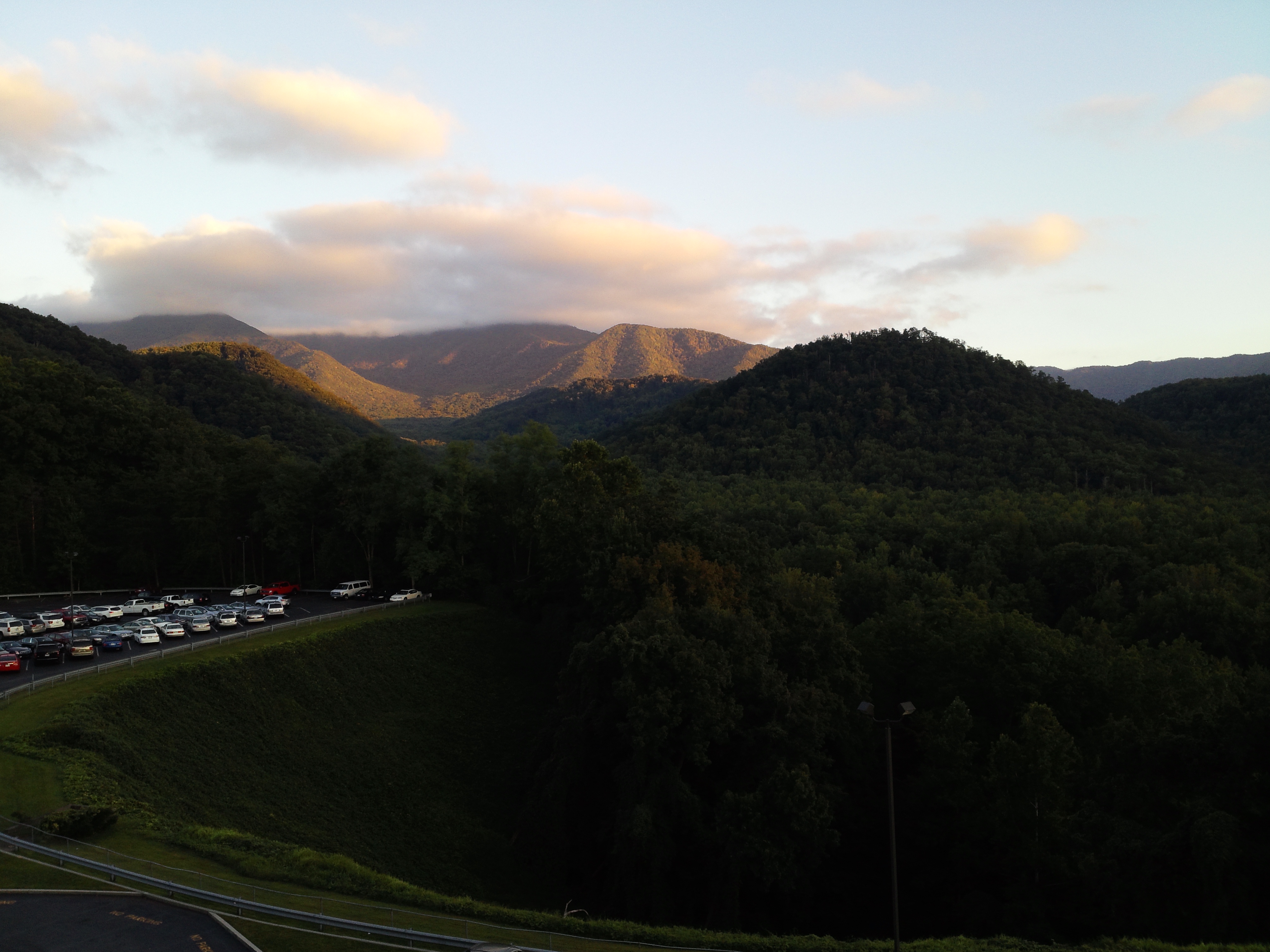
After leaving I-40 we wound our way along the Foothills Parkway, a crooked, two-lane roadway through heavily wooded mountainous terrain. The quiet beauty calmed us after the nerve-wracking drive crushed between semi’s and the concrete wall dividing the interstate as it snaked its way over the mountains. Our destination awaited only a few miles away in Gatlinburg. We soon reached the congested streets of the vacation mecca atop the mountains. Turning left, we climbed, passing motels and restaurants, until we reached the narrow, steep, winding driveway up to the top where our hotel, the Park Vista, stood overlooking the narrow valley that is Gatlinburg.old friends talk at reunion

This was where the 276th Armored Field Artillery chose to hold their final reunion. The destination for five aging WWII veterans to reunite once more. Time may have reduced their numbers but not their spirits. The dwindling group of veterans and their families were joined by sons, daughters and wives of other, already deceased veterans – all coming together to remember and celebrate their service so many years ago.Mr and Mrs Cross at reunion

My husband was one of those sons of deceased 276th veterans. We were newcomers to the reunions yet we were welcomed into the fold like long-lost relatives. The people who gathered at the Park Vista, related only by the service of a group of young men almost seventy years ago, were the most gracious, most friendly and warmest group of people we have ever encountered.Mr Tyson talks to Pat at reunion

Organized in 1943, the 276th AFA Battalion was one of several artillery units converted to mobile, track-mounted 105 mm Howitzers  (M-7’s) to provide mobile artillery support to infantry and armored divisions. In the summer of 1944, after the D-Day invasion at Normandy, the 276th crossed the Atlantic, landed in England, then crossed the channel to France. The Battalion fired its first combat round in September, 1944. From that point they were in continuous combat, battling their way across Europe, until the Germans surrendered in May, 1945. By July, they were again crossing the Atlantic, but this time their destination was home, not for good, but for additional training before being sent to the Pacific. The war with Japan still raged. Fortunately for these combat weary young men, the Japanese surrendered before their unit was redeployed.

The veterans of the 276th fascinated us with their positive, even joyful, attitudes as they answered questions, re-told old stories and remembered their fellow soldiers who had passed away in the intervening years. Sons and daughters shared stories their fathers had told to them.  None of the five were officers. Their military jobs ranged from clerk to radio man to mechanic to driver yet they told stories of bullets that came within inches, artillery shells bursting nearby, encounters with enemy soldiers and freezing weather.

Of the five Batteries in the Battalion, four were represented at the reunion – Headquarters Battery, Battery A, Battery C, and Service Battery. Pictures of earlier reunions, with the participants all decked out in their finery, relayed the history of these events. A map detailed the Battalion’s journey as it fought its way across France, Belgium, Luxembourg, Germany and Czechoslovakia. Old pictures were perused for familiar faces. Watching a taped interview with one veteran brought a lump to my throat and tears to my eyes. Such amazing men who went off to war at such a young age leaving their families and loved ones behind.

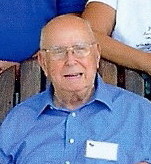
Mr TysonMr ThomasMr NarushofThey journeyed from various locales to reunite with old friends. For these elderly men and their wives the trip could not have been easy nor possible without help from their families. The devoted son of one veteran organized the event and, despite his father’s failing health, drove from Indiana so there could be one last reunion. The eldest veteran, at ninety-seven, flew in from Massachusetts accompanied by his daughter and son-in-law. Another man from Georgia brought his wife, children, grand-children and great-grandchildren. And a former Tennessean and his wife were transported from Cincinnati by their son and daughter-in-law.Mr CrossMr Clevenger

The son of a deceased veteran drove down from Milwaukee. This faithful son told of his trip to Europe to retrace the route of the 276th. He and his father, both devoted history buffs, had attended previous reunions and the son had known many of the 276th veterans. They planned to take the European trip together but his father did not live to make it so the son went alone in honor of his father.

Another son, daughter and son-in-law journeyed across the mountains from North Carolina for the reunion. Like my husband’s father, their father never came to any of the reunions. He talked of his service but would never contact any of the men he served with. After his death his son decided to meet some of the men his father fought with so many years ago and participate in the reunions. Knowledgable and friendly, these North Carolinians shared stories from former reunions, of other veterans now gone and reenactments. They generously shared their photos, too.Mr Tyson and James at reunion

The reunion was a special time for the aging men to reconnect and remember their youth. As Tom Brokaw said of the WWII veterans in his book “The Greatest Generation,” these men did not brag about their service. They quietly spoke of events but always expressed that they were just doing their job, doing what they had been trained to do, doing what they had to do. It was touching to watch them talk, and laugh and reminisce about those times.

In their young, formative years these men forged a bond like no other – the bond of combat. And they became our heroes. By doing their jobs, they enabled us, their children and grandchildren, to live the lives in a free, democratic society. They freed the world from the tyranny and dictatorship that threatened to engulf the globe. We so often forget that in 1943 when these young men first came together, the Allies were losing the war and it looked like it would take many years of fighting to defeat Germany and Japan. They had a big job ahead of them but they knew they would win – eventually. That faith in themselves, in this country, was remarkable. And we saw that same positive attitude in the remaining veterans that we met in Gatlinburg.

Too soon it was time to leave. Each of us going  back to our own part of American. I hope we can stay in touch with these wonderful people, each fascinating in their own way. As we drove down out of the mountains and south toward Florida, we agreed that it had been a wonderful experience, a chance to touch the past, to talk with those who had lived it. Too soon they will all be gone, but they will never be forgotten.

Family Pictures Lead to Search for Information

When my sister-in-law visited us this month she brought with her a stack of old pictures, many of which we had never seen before. Most of the pictures were of members of my husband’s family. Both sides were represented, his father’s family and his mother’s family. I scanned them all. Then we decided to identify as many people as we could. Some had names written on the back. Some had things like “mother” or “grandfather” written on them. We had to know who wrote on it to determine who was in the picture or, in some cases, we recognized them from other pictures we had. What started out as simply scanning the pictures turned into a major project of genealogical research.

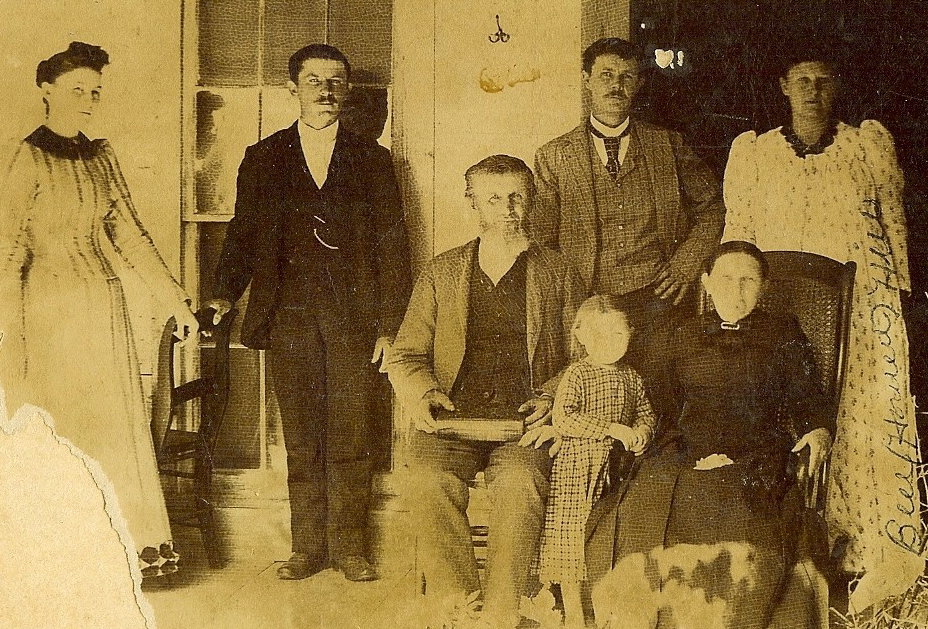
Seated - L J and Joannah Howell.
Seated – L J and Joannah Howell.

Technically, I had to figure out how to put the names of the people on the scanned photos. I tried using the software we got with the camera we bought a couple of years ago, but many of the group photos didn’t have room to type all the names in a text box. Then I discovered that when viewing the scanned photo in Windows 7 Pictures I could add a comment to the file. So I typed the names of all the people we could identify into this comment field. You can’t see the field when viewing the pictures in slide-show mode, but you can have the information as part of the picture’s file.

To help get the names right, I signed into Ancestry.com where my son created an extensive family tree. My sister-in-law had never been on Ancestry.com. She was so impressed she decided to sign up for membership when she got home.

Together we searched the families and filled in the names. Of course, we got sucked into the genealogy. I showed her how we could search for details on a person by searching census records and military records. I also shared with her some records that I had printed out. We spent hours searching, reading and updating.

It’s funny how you see different pieces of information and then suddenly make the connection. An example is the research I did for my husband to find the ancestor who served in the Confederate Cavalry and rode with Nathan Bedford Forrest. He’d heard stories from his grandmother and great-grandmother who at one time had some old pistols and a uniform. But he was so small that when he grew older he questioned the truth of the stories. The artifacts had been long ago sold or given away. So I searched and found that Lee J. Howell served in the 18th Tennessee Cavalry Regiment which was organized in West Tennessee where they lived. The 18th came under the command of General Nathan B. Forrest in 1864.

Lee J. Howell - older man sitting on right
Lee J. Howell – older man sitting on right

We were looking up members of the Howell family to help understand the names and relationships of the people in the pictures. That’s when I put two and two together and realized Lee J. Howell was my husband’s Great-Great-Grandfather. His full name was Levi J. Howell, but according to census records he went by Lee. And the Great-Grandmother who told my husband the stories about the Civil War was Lee J. Howell’s daughter, Bell.

I also found Lee J. Howell in the 1920 census at age 87 living in the household of his son-in-law, which means he was living with his youngest daughter who had married a man named William Hockaday. That solved the mystery of the pictures which had written on them names of members of the Hockaday family.  Before making this discovery we didn’t know who the Hockaday’s were.

Jack Hockaday
Jack Hockaday

Research into families can be fascinating, especially when various pieces of information are shared. Each piece adds something to the puzzle.

Wounded Warriors of WWII

On Memorial Day we honor those who sacrificed for their country. I have always been proud that my father worked to rehabilitate the wounded warriors during WWII as part of a new program, introduced in 1943. This program utilized athletes and coaches from across the country.scan0011

My father played baseball and basketball in high school, helped coach the local teams and played semi-pro baseball before the war started. Wiseman VioletsHe considered himself fortunate to be selected as part of this rehab program. His letters to my mother reflect his sense of honor at being among the many talented athletes.Ream General Hospital Baseball Team

While going through some old papers that my mother carefully packed away in a small wooden chest, I came across a newspaper article dated October 13, 1943, she clipped from the Rockford, Illinois, newspaper. This article, by Pvt. Howard Martin, explains the rehabilitation program better than I could, so I have transcribed it here. I hope you find it as interesting as I have.

TRAIN PICKED GROUP TO REHABILITATE WOUNDED

by PVT. HOWARD MARTIN

One hundred nineteen picked men, combed from the nine service commands, are hard at work at Camp Grant under a new physical education rehabilitation program designed by the surgeon general to recondition convalescents in hospitals in the United States and in combat zones. The school, now functioning under the direction of Capt. Everett C. Hogan at Company D of the 32nd battalion, is the first established by the army.

All soldiers selected for the eight-week course were former athletes, college and high school coaches and experts in teaching physical education in civilian life. The men, prominent in baseball, football and basketball, have plunged into their new duties and with a zest that is the marvel of Lt. Karl Gertenhouse, appointed by Capt. Hogan to be in charge of the detachment for classes and duties. His assistant is Lt. John Fitzgerald.

Upon reporting to Camp Grant the prospective phys-eds received a 10-day refresher course reviewing group exercises and physical education conditioning subjects as prescribed by the surgeon general. Maj. C. H. Barton, of the surgeon general’s office, conducted this class and the men then moved to Company D to begin learning their  new duties under the physical education rehabilitation program.

Four Point Program

As outlined by Lt. Gertenhouse, the rehabilitation program is divided into four groups:

1 – Getting convalescent soldiers back to duty with mass drills and competitive sports designed to restore the will to win.

2 – Ambulatory cases who have been on their feet for some time will be given body building and breathing exercises and such games as softball, medicine ball, volley ball and tumbling.

3 – Ambulatory cases still requiring treatment will be led in moderate arm and shoulder exercises and participate in light games.

4 – Bedridden patients will receive special exercises designed to strengthen uninjured parts of the body.

Under the rehabilitation program the instructors must be able to lead classes, give correct demonstrations and determine which type of reconditioning fits the convalescent soldier.

Puts In A Strenuous Day

The phys-ed trainees – many are non-commissioned officers – have a busy day that begins with calisthenics at 7:30 a.m. From 8 to 9 there is close order drill with each man learning to give commands. This is followed by a period of college anatomy and physiology. Special service duties and hospital management are studied for the next hour and at 11 there is more drill and tests in ensuing commands.

Afternoons are devoted to hikes of 7 to 12 miles twice a week, four hours on the obstacle course once a week and two to four hours in the commando gymnasium learning judo, tumbling and physical exercises. And when there is time, the group engages in competitive games.

The physical part of the program is directed by Master Sgt. Melvin L’Dell, who teaches jiu jitsu and commando  fighting, and Staff Sgt. J. P. Leverett, commando group exercise instructor, who makes things look easy in his demonstrations, which, when put into practice by his willing pupils, cause involuntary groans and creaking of bones and muscles.

Among the better known athletes receiving instruction under the phys-ed rehabilitation program are Euel Moore, who pitched for the New York Giants in 1935; Heinie Mueller, late of the Philadelphia Phils; Carvel Rowell, star of the Boston Braves and Milt Trost, the former Marquette University and Chicago Bear football tackle.

Others in Class

Other coaches and athletes attending the rehabilitation school are: Nick Jackimchuck, who played baseball with Indianapolis in 1942; Burt Van Buren, who coached Dunellen high school to the New Jersey state high school basketball title last winter; Allen Burns, former Kansas State basketball star and later coach at Fredonia, Kas., high school, which won state prep basketball title; Jack White, Haskell Institute athlete, basketball and football player at Redlands college and coach at Bacone junior college in Muskogee, Okla.; Jimmy Dunn, professional squash racquets and court tennis player from Philadelphia; Quinten Laabs, football half back from New Mexico A. and M.; William H. Lutz, track coach at Centralia, Ill., where Dwight Eddleman learned the form that enabled him to jump 6 feet 7 1/4 inches as a high school boy; Howard Wright, basketball captain at Purdue University in 1927; Tom Hamill, who pitched for Montreal of the International league last year; Clair Bates, first Baseman with Oklahoma City and Shreveport of the Texas league; Russell St. Pierre, baseball property of the St. Louis Cardinals; Louis Romano, basketball start at Glenville college (W. Va.) and with Aberdeen Proving Grounds quint; and Frank McElyea, outfielder and first baseman with the Boston Braves last year.

I listed all the names in case someone is searching for information about their family member’s service during WWII. Many of the support groups get little recognition. I have found very little information in my internet searches for more information about the phys-ed rehabilitation program, so I am sharing what information I have.

Battle of Stones River Remembered

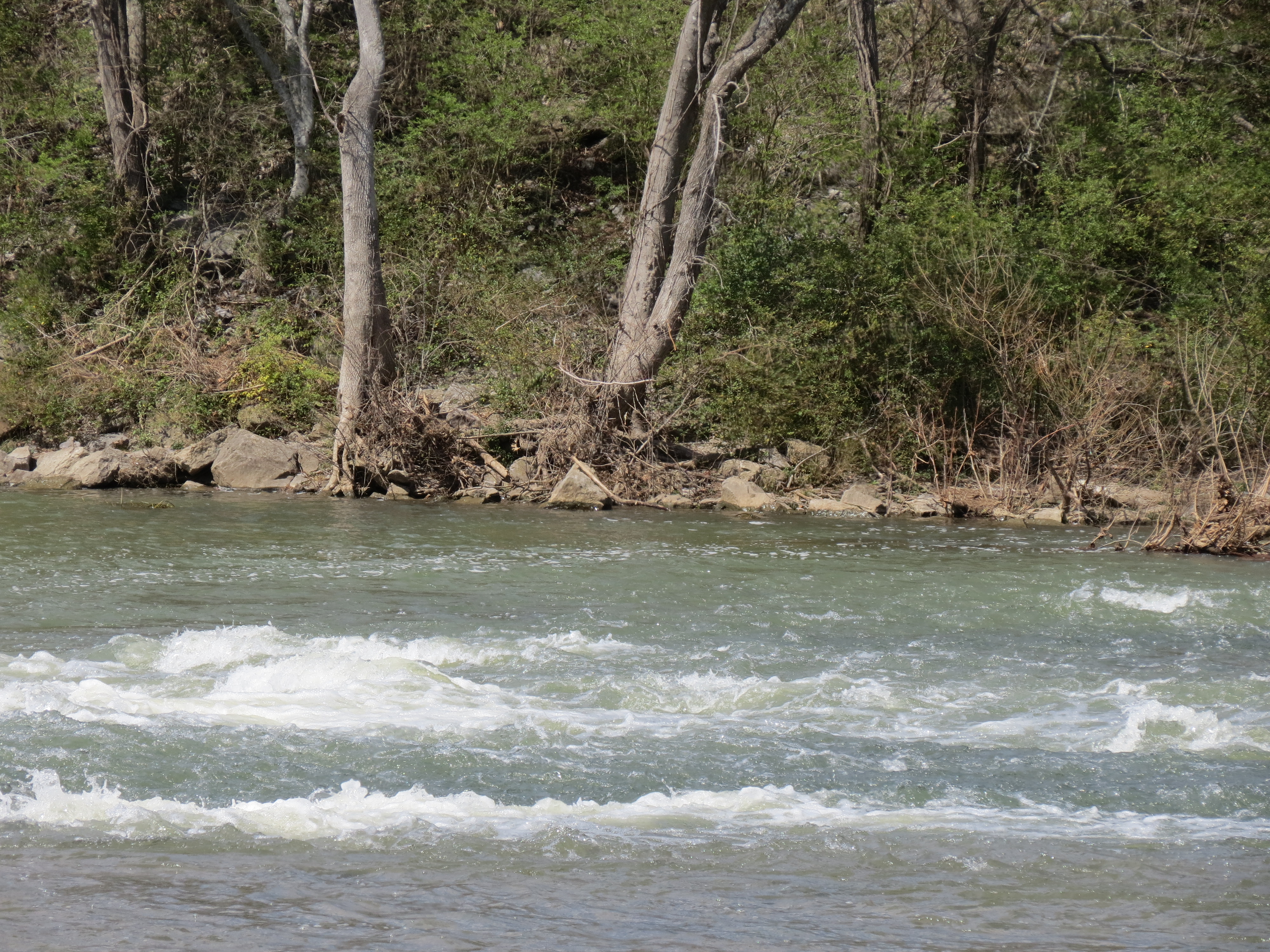
The picturesque Stones River winds its way through Rutherford County, Tennessee, on its way to Percy Priest Lake and eventually to the Cumberland River. Along its shores the Stones River National Battlefield spans a small parcel of the land where Confederate and Union forces fought December 31, 1862, through January 2, 1863. Caught amid the urban sprawl of modern-day Murfreesboro, the site marks one of many battles, in what was then considered the “west,” that allowed the Union forces to split the Confederacy.

Visitor Center
Visitor Center

On a recent trip to Tennessee, our son took us to the Stones River National Battlefield.  I’ve visited many Civil War battlefields over the years but this was my first time at Stones River.  At the visitors center we learned about the battle and then we took a driving tour. My husband and I are both history buffs and we have a particular affinity for the Civil War. Both of us have ancestors who fought for the Confederacy and we both grew up with the many Civil War sites nearby.  Seeing the terrain and hearing the story of the Battle of Stones River gave us an understanding of what the men who fought here went through one hundred and fifty years ago.

Stones River
Stones River

At the beginning of the war, Tennessee seceded while Kentucky did not. This drew the initial lines in the “west.”  By mid-1862 most of the Mississippi was lost and Union ships blockaded the southern and eastern ports. Union strategists planned to cut a wedge through Tennessee and Georgia to divide the Confederacy. Although widespread, the road network of the day would not sustain transport of supplies, munitions and men. Railroads and riverboats provided the fastest and easiest means of transport. So the Union generals were ordered to capture the railroads and take control of the rivers.

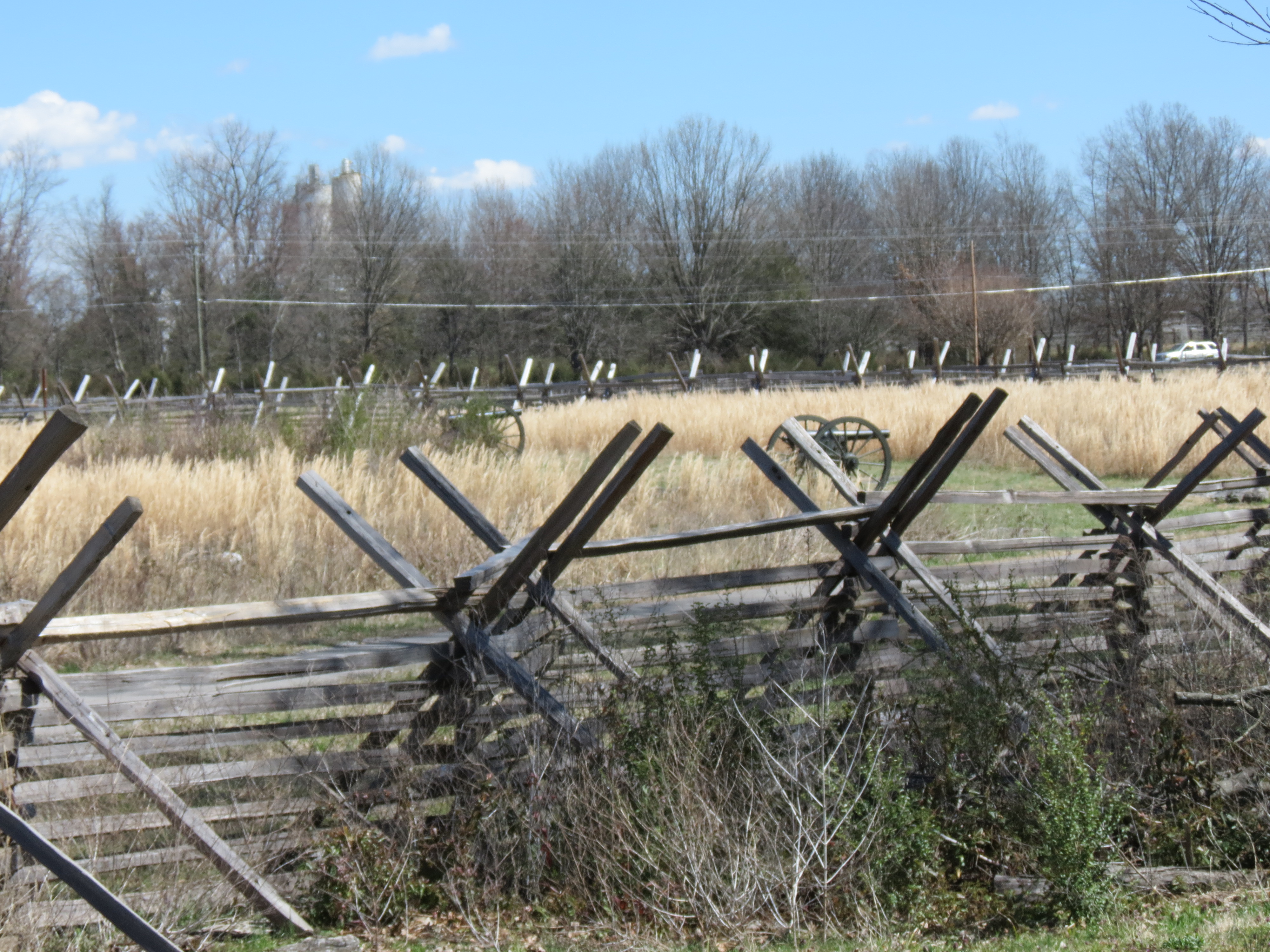
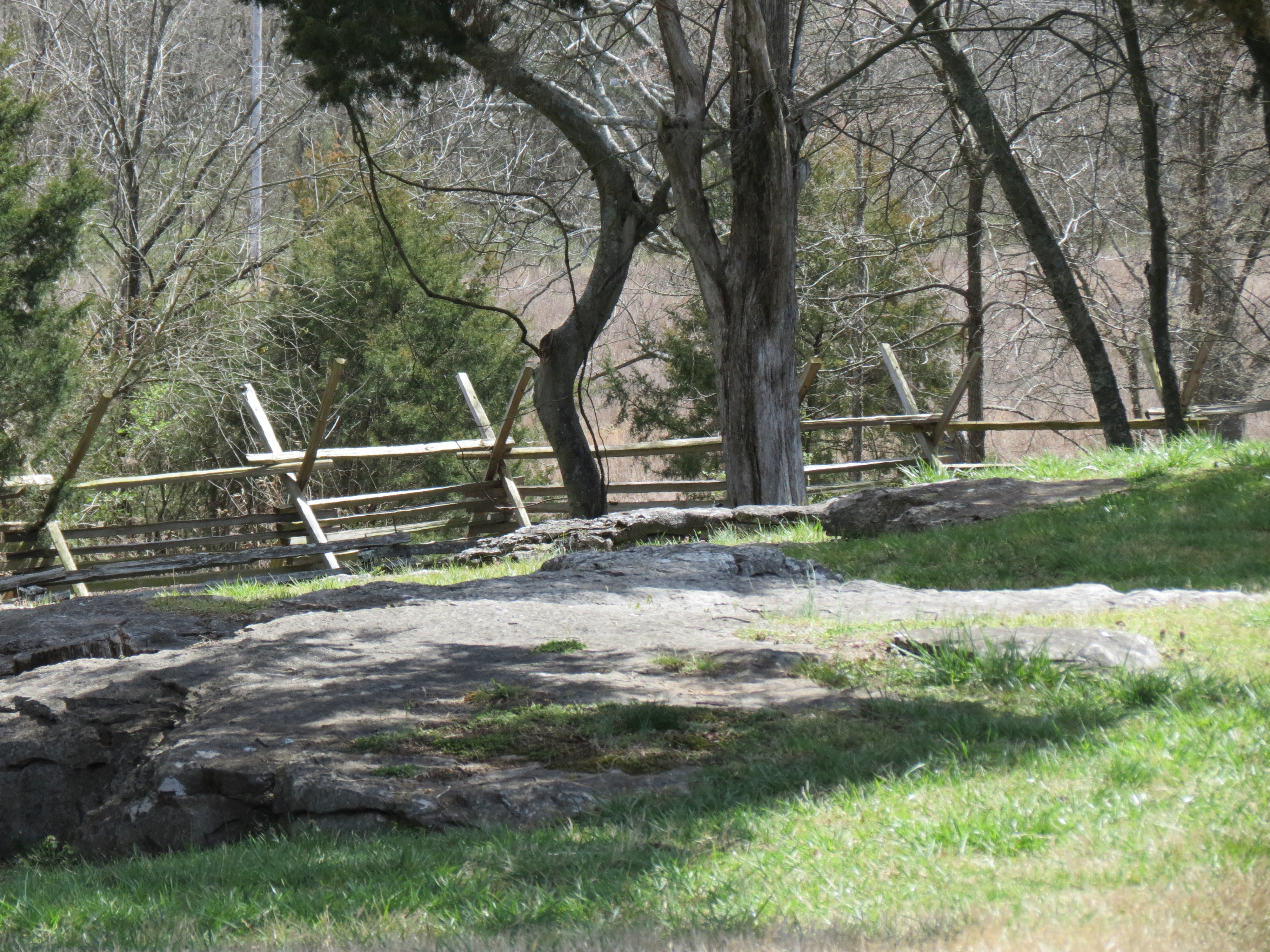
Fences on Battlefield

The spring of 1862 saw the fall of Fort Donelson and Nashville, both on the Cumberland River. On the night of December 30th General William Rosecrans left Nashville and marched his men southeast along the Nashville Pike, which paralleled the Nashville & Chattanooga Railroad. They camped just outside Murfreesboro where the enemy waited. Anticipating the coming fight, Confederate forces under General Braxton Bragg attacked on the freezing-cold morning of December 31st. From the south they pushed  the Union troops back toward Nashville Pike, the railroad and the Stones River.  The battle raged across cotton fields, through stoney outcroppings and cedar thickets for three long days. Thousands on both sides were killed, wounded or captured.  (13,249 Union, 10,266 Confederate)

Terrain near river, scene of last day of battle

Approximate area of river crossing

On January 2, 1862, after having pushed the northern troops off a hill and across the Stones River, Union artillery on the far side of the small river fired on pursuing Confederates, killing or wounding nearly 1,800 in mere minutes. The southerners retreated as the Yankees recrossed the river and retook the high ground.  The following day General Bragg withdrew his men from the battlefield and from Murfreesboro.

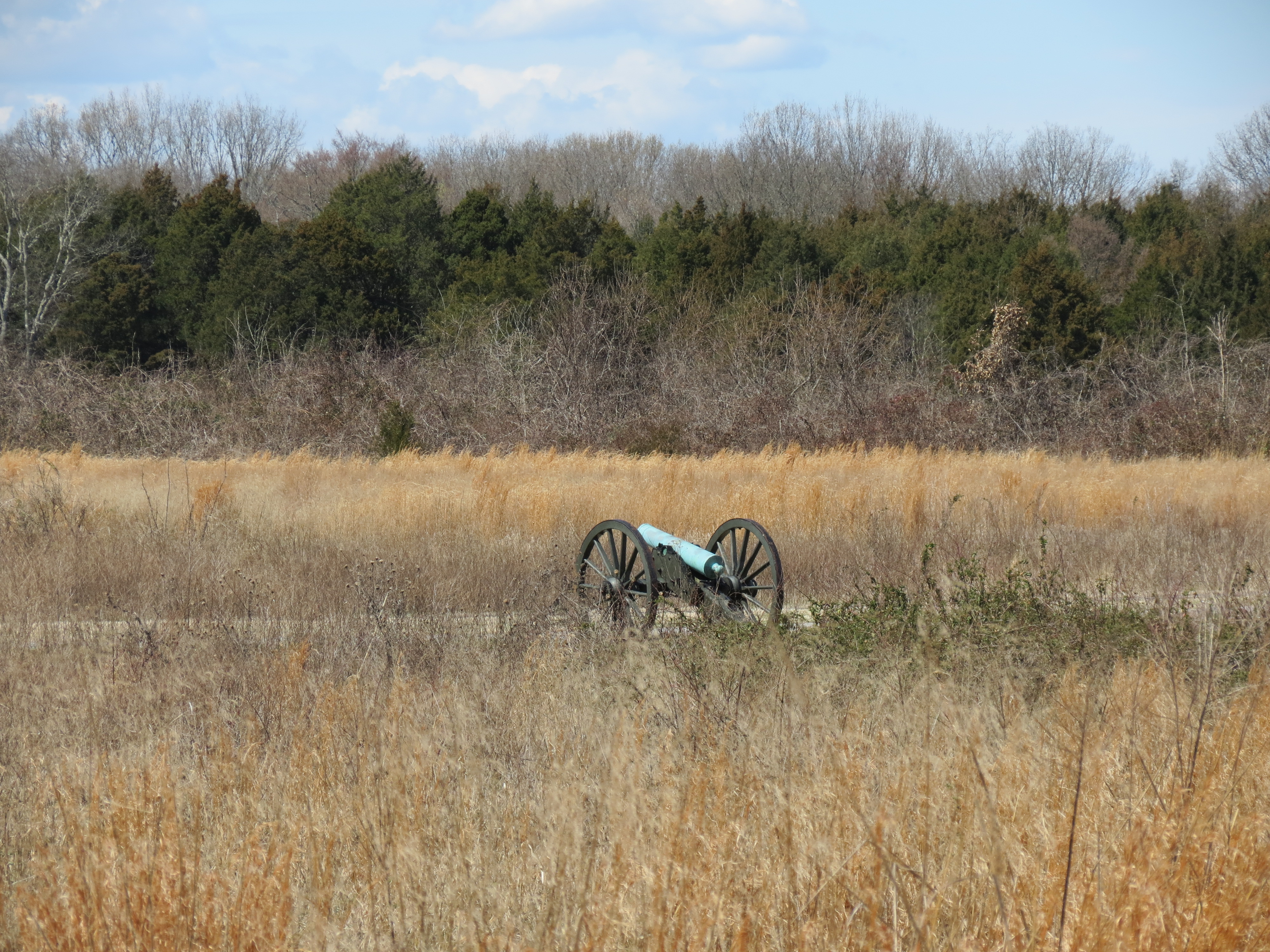
Cannons fired across the fields.

In the months following the battle, General Rosecrans built a large fort at Murfreesboro called “Fortress Rosecrans.” This 200 acre, earthen-works fort became the supply depot for the later campaigns against the rail center  in Chattanooga and eventually Atlanta.

In 1863, not long after the battle, Colonel William Hazen’s men built a monument to commemorate the Union soldiers lost in the battle. It is the oldest intact Civil War memorial.

Hazen Brigade Monument

In 1866, over 6,100 Union soldiers were reburied in the Stones River National Cemetery.  In 1867 remains of Confederate soldiers were moved to a cemetery south of Murfreesboro. Later, in the 1890’s, about 2,000 southerners were moved again to Evergreen Cemetery in Murfreesboro. As at many other battlefields, the U.S. government established cemeteries for the Union soldiers who died, but private citizens provided for the interment of the Confederate dead.

Across the fields to the Stones River Cemetery

The Stones River battlefield became a tourist attraction bringing people and needed money to the area. Situated along the railroad, the Nashville, Chattanooga & St. Louis Railway provided excursions for those who wanted to see the cemetery, memorials and the battlefield  itself. The railway published a book called “Southern Battlefields” in 1890 to serve as a guidebook for those touring the many battlefields. Later, in 1906, the railroad built the artillery monument, a 34-ft-tall obelisk marking the hill where the last attack took place so that the passengers could see it from their train.

Hazen Brigade Monument - inside the wall
Hazen Brigade Monument – inside the wall

Modern day tourists can explore the preserved portion of the battlefield and the surrounding area. With the help of maps and information provided at the visitor center, tourists can maneuver through homes and business areas to find the Hazen Brigade Memorial, the remnants of “Fortress Rosecrans” and to explore the Stones River.

Marker along driving tour

When we returned home, I did a little research to determine if any of our ancestors fought at Stones River. It turns out that the Tennessee Sharpshooters (also called Maney’s Sharpshooters, 24th Tennessee Sharpshooter Battalion, Maney’s Battalion) under Captain Frank Maney are listed in the order of battle for the Army of the Tennessee at Stones River.  George Wade Knight, my great, great-grandfather, served in the 24 Battalion Tennessee Sharpshooters as did his brother-in-law, Perry L. Brown and his wife’s brother-in-law Philander Rushing.  All were from Humphreys County and probably joined up together.

Leaving Hazen Brigade Monument

Post Office Family

With the U. S. Postal Service’s proposal to cut Saturday service in the news, I thought of all the members of my extended family who worked for the Post Office over the years. I also thought of how Post Offices in small towns across America have contributed to these communities. I grew up in one of these small towns and, with my family connections, I saw first hand the contributions it made.

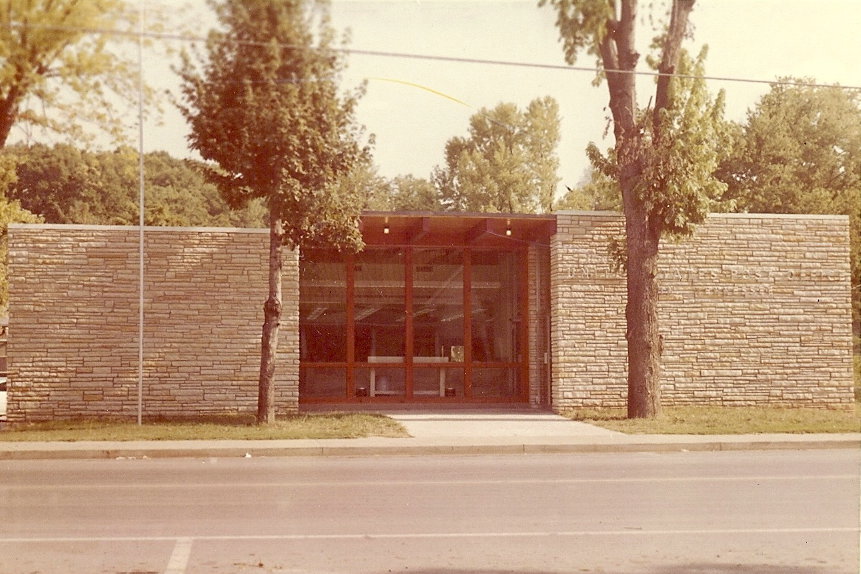
Post Office 1960
New Post Office 1960

Everyone in a small town visited the Post Office. It served businesses and individuals selling postage, shipping packages, providing Post Office boxes for mail delivery as well as general delivery services and rural delivery. In the days before email, people wrote letters and sent cards at Christmas, for birthdays or in sympathy. Businesses sent out bills and people paid them by mail, and often paid with Postal money orders. Legal documents that required signatures to confirm receipt went through the local Post Office. No express package carriers delivered the catalog orders or the special deliveries. The Post Office was the communications hub for the community.

And, often, the Post Office was a gathering place. Workers at the local Post Office knew everyone in the area, both names and addresses. They knew where people came from or where they have moved; they knew family connections, childrens names, and who worked where.

In our small town, as in those across the country, rural mail delivery made up an important part of the service provided by the Post Office. In years past, the rural mail carrier might have been the only connection to the outside world many country folks had. The carrier brought the mail and the news. He or she could be counted on to be there – every day.

Post Office Employees in My Family

In the late 1930’s my grandmother, Elvira Boone, was appointed Postmaster of our small town. Unlike many women of the time, she had attended Bethel College and she had worked for years as a bookkeeper in her brother-in-law’s drug store. So she had the qualifications. Her cousin, a U. S. Congressman, was credited with obtaining the appointment for her. Prominent members of the local community must have added their recommendations.  No doubt her appointment wrankled some local men who undoubtedly thought a prominent, well-paid position such as Postmaster should not go to a woman. Yet her calm, business-like manner gained her the respect of the entire community. She managed the office and its employees, most of whom were men, with few complaints. Elvira was Postmaster until the was forced to retire in 1963 at age 70.

Elvira Boone, Postmaster
Elvira & William at Postmasters Convention in San Francisco

During her career as Postmaster she attended numerous Annual Postmaster’s Conventions across the country. My sister went with her to a convention in Washington, D. C. and my Uncle William accompanied her on several trips.

My grandmother was not the first postal employee in the family. According to a family story, my fraternal grandfather was a rural mail carrier for a time. He delivered the mail by horse and buggy. Once when he tried to ford a creek swollen from rain, his buggy turned over and he was washed down the creek. This incident upset my grandmother so much that he gave up the rural route.

Post Office Employees, Erin, Tn. 1950's
Post Office Employees, Erin, Tn. 1950’s

Many more family members worked for the Post Office over the years. This picture was taken during my grandmother’s tenure as Postmaster, probably in the 1950’s. From left to right: Thomas Douglas – Clerk (my Father’s Cousin), Roland Roby – Rural Carrier (my Father’s Sister’s Husband – my Uncle), Guy Knight – Rural Carrier (my Father’s Brother- my Uncle), Ewing Rainwater – Clerk (my Mother’s Sister’s Husband – my Uncle), Dunc Dillon – rural Carrier (no relation), Pat McCarty – Rural Carrier (no relation), Bill Smith – Rural Carrier or Clerk (no relation), Elvira Boone (my maternal Grandmother).

In the late 1950’s my mother began her Postal career as a Substitute-Substitute Clerk.  She worked when the full-time Clerk or the Substitute Clerk was sick or on vacation. At that time the local office employed only one full-time Clerk. When the mail volume was heavy, the Substitute Clerk worked longer hours, and additional hours were authorized for the Substitute-Substitute Clerk, especially before Christmas. The Rural Mail Carriers worked part-time, coming in early every morning to sort the mail for their route and delivering it in their own vehicles. The length of their workday depended on the volume of mail that day and the length of their route.

Up until the 1960’s, mail arrived via train each morning and afternoon. In the early years, my mother would work two hours in the morning to sort the incoming mail and distribute it to the rural carriers. Then she would go home and return for another two hours in the afternoon to again sort incoming and outgoing mail. Not many people wanted to be available to work when needed or to work these hours.

When the town grew, a second full-time clerk was authorized. My mother moved up to the Substitute Clerk position and her hours increased. By this time we children were old enough for her to be away from home more. Later, she was promoted to full-time Clerk. She retired in 1989 with a good pension. Within a few years this pension, along with one my father left her, paid for the cost of her care as an Alzheimber’s patient.  I will always be grateful that she not only had the income during her active lifetime but also when she became ill.

The family connection to the Post Office extended far beyond our small, local community. One of my mother’s sisters, Wildred, worked in the Akron, Ohio, Post Office until her retirement. A letter from my mother’s aunt Eunice, dated 1942, mentioned that her daughter Lemoine worked at the Post Office in Sitka, Alaska.

So when I hear of the Postal Service is having financial diffuculties and that Postal employees are losing their jobs, I think of what those jobs meant to my family. Over the years the Postal Service has provided jobs not only for minorities and veterans, but for women who had little opportunity for steady, good-paying jobs with benefits.  Even though we have other means of communication these days, the Postal Service provides vital services. I, for one, think we should support the Postal Service as an essential government function. It’s not really a money-making business like some want to make it. It is a vital part of our national infastructure.

Malvern Hill or Gettysburg?

Was my ancestor wounded at Malvern Hill or Gettysburg? Accounts differ, but they provide fascinating information about the battles and his unit’s participation in those battles.

E. D. Boone
E. D. Boone

Etheldred D. Boone enlisted in Company B 14th Tennessee Infantry Regiment, CSA. The regiment was organized near Clarksville, Tennessee, in June, 1861.  Along with the 1st Tennessee and the 7th Tennessee Infantry Regiments, the 14th completed the three regiments that made up the Tennesse Brigade assigned to Lee’s Army of Northern Virginia.

Company B, organized in Palmyra, consisted of members primarily from Montgomery County. E. D. Boone lived in what was then Stewart County near the town of Erin, which later became the county seat of Houston County. In 1861 Palmyra was a thriving community a few miles and a short train ride from Erin. The train ran through Erin to Cumberland City then along the Cumberland River to Palmyra and on to Clarksville.

As part of Lee’s campaign to save the Confederate capital, Malvern Hill was the last of the Seven Days Battle for Richmond which began at the Battle of Oak Grove on June 25, 1862, and ended at Malvern Hill on July 1st.

In a letter written in 1909 by a surviving member of Company B to E. D. Boone’s son, Samuel B. Powers stated that E. D. Boone was wounded at Malvern Hill. See the full text of the letter from Samuel B. Powers at the end of this post.

In 1862 the Tennessee Brigade, commanded by James J. Archer, was attached to A. P. Hill’s division of Lee’s Army of Northern Virginia. On June 26th Hill’s division engaged the Union forces at Beaver Dam Creek and again at Gaines Mill on June 27th. The division fought at Glendale on June 30. But, on July 1st,  A. P. Hill’s division, exhausted from the previous days fighting, was held in reserve during the Battle of Malvern Hill.

So could my ancestor have been wounded at Malvern Hill? With all the fighting over a seven-day period, it is possible that he was wounded during this campaign. The battle at Glendale took place on the approach to Malvern Hill where the Union forces had retreated to the high ground. A large number of Union troops had dug in on the hill, with artillery in place, prepared to make their stand when the Confederates attacked on July 1st. At the time the names of the various battles were not as distinct as they are today. Historians have given names to the various actions based on specific locations and dates, yet the soldiers on the field may have referred to them differently. If he was wounded at Malvern Hill, as the letter states, he was probably wounded on June 30 in what is now called the Battle of Glendale.

But then there is the other account – that E. D. Boone was wounded at Gettysburg. In my grandmother’s library a book titled “A History of Tennessee and Tennesseans” (1913) contained biographies and histories of prominent Tennesseans. My grandfather’s write-up told of his father’s service in the Confederate Army. “…serving therewith until the battle of Gettysburg, when he was seriously wounded during Pickett’s charge. He was carried back with the army into Virginia, and remained in the hospital at Richmond until the close of the war, and for some time thereafter was compelled to use crutches.” The source of this information is unknown.

The Tennessee Brigade, including the 14th Tennessee Regiment, did participate in the battle of Gettysburg as part of Henry Heth’s Division in A. P. Hill’s Third Corp. Their commander, James J. Archer, was captured on the first day, July 1, 1863. Command passed to Birkett D. Fry who led the Tennessee Brigade at the forefront of Pickett’s famous charge on July 3, 1863. Elements of the 14th reached the Union lines but lost their battle flag to the Yankees within their battle works.

One hundred men, of the original one thousand, reformed the 14th Tennessee Regiment on the day after Gettysburg. By the surrender at Appomattox Court House the following year only 40 men remained.  Regardless of when he was wounded, E. D. Boone served with honor, was wounded and his widow received a widow’s pension.

Due to his untimely death in 1873 of cholera, E. D. Boone never had the opportunity to tell his son about his military experiences. Perhaps by requesting copies of E. D. Boone’s military record and his widow’s pension application from the Tennessee State Archives, I will be able to obtain more information about his service.

Letter written to W. R. Boone by Samuel B. Powers regarding E.D. Boone’s service in the Confederate Army.

RFD # 1
Palmyra, Tenn.
Feb 12th, 1909
 
Mr. W. R. Boone
Erin, Tenn.

I received a note from Capt. W. G. Russell a few days ago with a letter from you enclosed making inquiry about E. D. Boone who was a member of Co. B 14th Tenn. Regt. in Confederate Army. Being a member of the same company I was very intimate with him. I waited on him through a spell of fever while in the Army. From your letter I think you want to know in what Battle he was wounded. It seems that the old boys of other companies do not agree about the battle he was wounded in. I have talked with your father since the war. He told me he was wounded at Malvern Hill, the last of the seven days fight before Richmond VA. If you will see a history of that fight you will see it commenced the 26th of June & ended the 1st day  July 1862.

Respectfully Yours,

Saml. B. Powers