The 276th Armored Field Artillery’s Last Reunion

After leaving I-40 we wound our way along the Foothills Parkway, a crooked, two-lane roadway through heavily wooded mountainous terrain. The quiet beauty calmed us after the nerve-wracking drive crushed between semi’s and the concrete wall dividing the interstate as it snaked its way over the mountains. Our destination awaited only a few miles away in Gatlinburg. We soon reached the congested streets of the vacation mecca atop the mountains. Turning left, we climbed, passing motels and restaurants, until we reached the narrow, steep, winding driveway up to the top where our hotel, the Park Vista, stood overlooking the narrow valley that is Gatlinburg.old friends talk at reunion

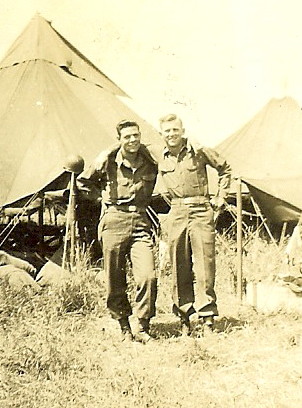
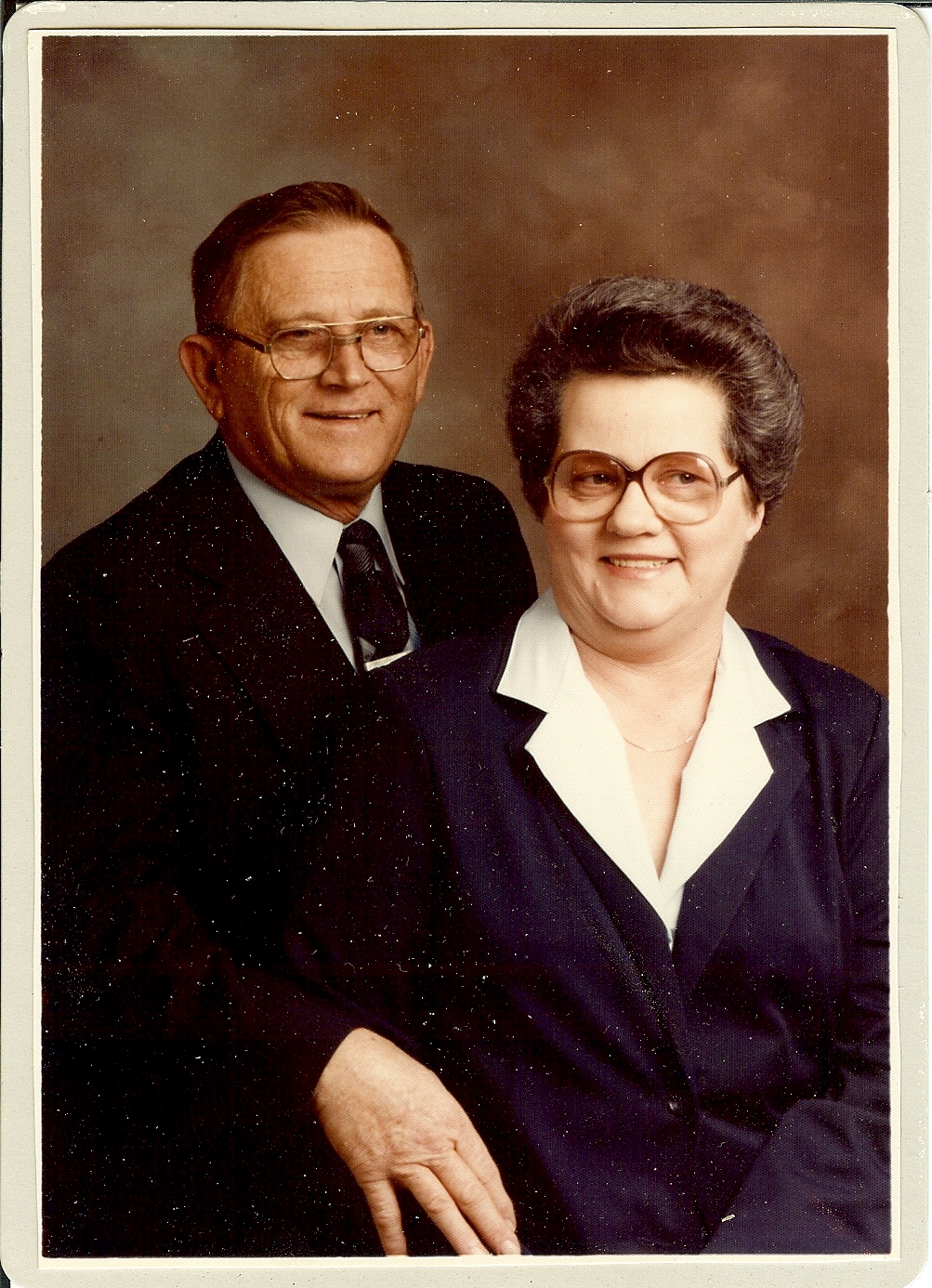
This was where the 276th Armored Field Artillery chose to hold their final reunion. The destination for five aging WWII veterans to reunite once more. Time may have reduced their numbers but not their spirits. The dwindling group of veterans and their families were joined by sons, daughters and wives of other, already deceased veterans – all coming together to remember and celebrate their service so many years ago.Mr and Mrs Cross at reunion

My husband was one of those sons of deceased 276th veterans. We were newcomers to the reunions yet we were welcomed into the fold like long-lost relatives. The people who gathered at the Park Vista, related only by the service of a group of young men almost seventy years ago, were the most gracious, most friendly and warmest group of people we have ever encountered.Mr Tyson talks to Pat at reunion

Organized in 1943, the 276th AFA Battalion was one of several artillery units converted to mobile, track-mounted 105 mm Howitzers  (M-7’s) to provide mobile artillery support to infantry and armored divisions. In the summer of 1944, after the D-Day invasion at Normandy, the 276th crossed the Atlantic, landed in England, then crossed the channel to France. The Battalion fired its first combat round in September, 1944. From that point they were in continuous combat, battling their way across Europe, until the Germans surrendered in May, 1945. By July, they were again crossing the Atlantic, but this time their destination was home, not for good, but for additional training before being sent to the Pacific. The war with Japan still raged. Fortunately for these combat weary young men, the Japanese surrendered before their unit was redeployed.

The veterans of the 276th fascinated us with their positive, even joyful, attitudes as they answered questions, re-told old stories and remembered their fellow soldiers who had passed away in the intervening years. Sons and daughters shared stories their fathers had told to them.  None of the five were officers. Their military jobs ranged from clerk to radio man to mechanic to driver yet they told stories of bullets that came within inches, artillery shells bursting nearby, encounters with enemy soldiers and freezing weather.

Of the five Batteries in the Battalion, four were represented at the reunion – Headquarters Battery, Battery A, Battery C, and Service Battery. Pictures of earlier reunions, with the participants all decked out in their finery, relayed the history of these events. A map detailed the Battalion’s journey as it fought its way across France, Belgium, Luxembourg, Germany and Czechoslovakia. Old pictures were perused for familiar faces. Watching a taped interview with one veteran brought a lump to my throat and tears to my eyes. Such amazing men who went off to war at such a young age leaving their families and loved ones behind.

Mr TysonMr ThomasMr NarushofThey journeyed from various locales to reunite with old friends. For these elderly men and their wives the trip could not have been easy nor possible without help from their families. The devoted son of one veteran organized the event and, despite his father’s failing health, drove from Indiana so there could be one last reunion. The eldest veteran, at ninety-seven, flew in from Massachusetts accompanied by his daughter and son-in-law. Another man from Georgia brought his wife, children, grand-children and great-grandchildren. And a former Tennessean and his wife were transported from Cincinnati by their son and daughter-in-law.Mr CrossMr Clevenger
The son of a deceased veteran drove down from Milwaukee. This faithful son told of his trip to Europe to retrace the route of the 276th. He and his father, both devoted history buffs, had attended previous reunions and the son had known many of the 276th veterans. They planned to take the European trip together but his father did not live to make it so the son went alone in honor of his father.

Another son, daughter and son-in-law journeyed across the mountains from North Carolina for the reunion. Like my husband’s father, their father never came to any of the reunions. He talked of his service but would never contact any of the men he served with. After his death his son decided to meet some of the men his father fought with so many years ago and participate in the reunions. Knowledgable and friendly, these North Carolinians shared stories from former reunions, of other veterans now gone and reenactments. They generously shared their photos, too.Mr Tyson and James at reunion

The reunion was a special time for the aging men to reconnect and remember their youth. As Tom Brokaw said of the WWII veterans in his book “The Greatest Generation,” these men did not brag about their service. They quietly spoke of events but always expressed that they were just doing their job, doing what they had been trained to do, doing what they had to do. It was touching to watch them talk, and laugh and reminisce about those times.

In their young, formative years these men forged a bond like no other – the bond of combat. And they became our heroes. By doing their jobs, they enabled us, their children and grandchildren, to live the lives in a free, democratic society. They freed the world from the tyranny and dictatorship that threatened to engulf the globe. We so often forget that in 1943 when these young men first came together, the Allies were losing the war and it looked like it would take many years of fighting to defeat Germany and Japan. They had a big job ahead of them but they knew they would win – eventually. That faith in themselves, in this country, was remarkable. And we saw that same positive attitude in the remaining veterans that we met in Gatlinburg.

Too soon it was time to leave. Each of us going  back to our own part of American. I hope we can stay in touch with these wonderful people, each fascinating in their own way. As we drove down out of the mountains and south toward Florida, we agreed that it had been a wonderful experience, a chance to touch the past, to talk with those who had lived it. Too soon they will all be gone, but they will never be forgotten.

Wounded Warriors of WWII

On Memorial Day we honor those who sacrificed for their country. I have always been proud that my father worked to rehabilitate the wounded warriors during WWII as part of a new program, introduced in 1943. This program utilized athletes and coaches from across the country.scan0011

My father played baseball and basketball in high school, helped coach the local teams and played semi-pro baseball before the war started. Wiseman VioletsHe considered himself fortunate to be selected as part of this rehab program. His letters to my mother reflect his sense of honor at being among the many talented athletes.Ream General Hospital Baseball Team

While going through some old papers that my mother carefully packed away in a small wooden chest, I came across a newspaper article dated October 13, 1943, she clipped from the Rockford, Illinois, newspaper. This article, by Pvt. Howard Martin, explains the rehabilitation program better than I could, so I have transcribed it here. I hope you find it as interesting as I have.

TRAIN PICKED GROUP TO REHABILITATE WOUNDED

by PVT. HOWARD MARTIN

One hundred nineteen picked men, combed from the nine service commands, are hard at work at Camp Grant under a new physical education rehabilitation program designed by the surgeon general to recondition convalescents in hospitals in the United States and in combat zones. The school, now functioning under the direction of Capt. Everett C. Hogan at Company D of the 32nd battalion, is the first established by the army.

All soldiers selected for the eight-week course were former athletes, college and high school coaches and experts in teaching physical education in civilian life. The men, prominent in baseball, football and basketball, have plunged into their new duties and with a zest that is the marvel of Lt. Karl Gertenhouse, appointed by Capt. Hogan to be in charge of the detachment for classes and duties. His assistant is Lt. John Fitzgerald.

Upon reporting to Camp Grant the prospective phys-eds received a 10-day refresher course reviewing group exercises and physical education conditioning subjects as prescribed by the surgeon general. Maj. C. H. Barton, of the surgeon general’s office, conducted this class and the men then moved to Company D to begin learning their  new duties under the physical education rehabilitation program.

Four Point Program

As outlined by Lt. Gertenhouse, the rehabilitation program is divided into four groups:

1 – Getting convalescent soldiers back to duty with mass drills and competitive sports designed to restore the will to win.

2 – Ambulatory cases who have been on their feet for some time will be given body building and breathing exercises and such games as softball, medicine ball, volley ball and tumbling.

3 – Ambulatory cases still requiring treatment will be led in moderate arm and shoulder exercises and participate in light games.

4 – Bedridden patients will receive special exercises designed to strengthen uninjured parts of the body.

Under the rehabilitation program the instructors must be able to lead classes, give correct demonstrations and determine which type of reconditioning fits the convalescent soldier.

Puts In A Strenuous Day

The phys-ed trainees – many are non-commissioned officers – have a busy day that begins with calisthenics at 7:30 a.m. From 8 to 9 there is close order drill with each man learning to give commands. This is followed by a period of college anatomy and physiology. Special service duties and hospital management are studied for the next hour and at 11 there is more drill and tests in ensuing commands.

Afternoons are devoted to hikes of 7 to 12 miles twice a week, four hours on the obstacle course once a week and two to four hours in the commando gymnasium learning judo, tumbling and physical exercises. And when there is time, the group engages in competitive games.

The physical part of the program is directed by Master Sgt. Melvin L’Dell, who teaches jiu jitsu and commando  fighting, and Staff Sgt. J. P. Leverett, commando group exercise instructor, who makes things look easy in his demonstrations, which, when put into practice by his willing pupils, cause involuntary groans and creaking of bones and muscles.

Among the better known athletes receiving instruction under the phys-ed rehabilitation program are Euel Moore, who pitched for the New York Giants in 1935; Heinie Mueller, late of the Philadelphia Phils; Carvel Rowell, star of the Boston Braves and Milt Trost, the former Marquette University and Chicago Bear football tackle.

Others in Class

Other coaches and athletes attending the rehabilitation school are: Nick Jackimchuck, who played baseball with Indianapolis in 1942; Burt Van Buren, who coached Dunellen high school to the New Jersey state high school basketball title last winter; Allen Burns, former Kansas State basketball star and later coach at Fredonia, Kas., high school, which won state prep basketball title; Jack White, Haskell Institute athlete, basketball and football player at Redlands college and coach at Bacone junior college in Muskogee, Okla.; Jimmy Dunn, professional squash racquets and court tennis player from Philadelphia; Quinten Laabs, football half back from New Mexico A. and M.; William H. Lutz, track coach at Centralia, Ill., where Dwight Eddleman learned the form that enabled him to jump 6 feet 7 1/4 inches as a high school boy; Howard Wright, basketball captain at Purdue University in 1927; Tom Hamill, who pitched for Montreal of the International league last year; Clair Bates, first Baseman with Oklahoma City and Shreveport of the Texas league; Russell St. Pierre, baseball property of the St. Louis Cardinals; Louis Romano, basketball start at Glenville college (W. Va.) and with Aberdeen Proving Grounds quint; and Frank McElyea, outfielder and first baseman with the Boston Braves last year.

I listed all the names in case someone is searching for information about their family member’s service during WWII. Many of the support groups get little recognition. I have found very little information in my internet searches for more information about the phys-ed rehabilitation program, so I am sharing what information I have.

Behind the Barbed Wire – American Airmen POW’s

When many of us think of American airmen held as prisoners by the Germans during World War II, we see images from the movie “The Great Escape” or the TV comedy series “Hogan’s Heroes.” Unfortunately, the truth about their imprisonment was no adventure and certainly no comedy. The real stories, as told by the men who lived through the experience, are fascinating. Their survival nothing short of miraculous.

American bomber crews and fighter pilots flew thousands of missions over German occupied Europe from 1942 to 1945. Many were shot down and most of the survivors became prisoners of war.

Just imagine – Airmen in a bomber raid flew at 20,000 feet or higher, endured sub-zero conditions in un-pressurized planes, survived terrifying fighter attacks and the helplessness of flying through flack to get to their targets. Youth, optimism and sheer determination kept them going. When their plane sustained damage, the decision to bail out came as a shock to many. Everyone knew it was possible, something they’d been briefed on before every flight, yet these brave, young men didn’t believe it would ever happen to them.

Some of them jumped into a sky filled with airplanes, bullets flying, debris from exploding planes, and artillery shells(flack)  exploding around them. Others chose between a crash landing or a parachute ride. When they floated to the ground in hostile territory, they landed in fields, in trees, in water, or in the very towns they had been bombing. Sometimes angry civilians greeted them, ready to kill them on the spot if the German military did not intervene.

The crews became separated once they bailed out and many did not see fellow crew members or know what happened to them until the war was over. If a downed airman landed in an occupied country, such as France, Holland, Belgium, Poland, or even Italy, local partisans or resistance fighters sometimes hid them and helped them evade capture. But with or without help, the Germans captured most of the downed airmen.

Until a prisoner was reported to the International Red Cross, he remained vulnerable to the whims of his captors. Once in the hands of the German military, downed airmen were transported to a Stalag Duft or interrogation center. Intelligence officers attempted to glean information from prisoners by keeping them in solitary cells and questioning them for hours at a time.

In German-held territory the different branches of the military ran POW camps. So, the Luftwaffe (German Air Force), the German Navy, and the Wehrmacht (German Army), operated separate camps. They generally complied with the requirements of the Geneva Convention for treatment of prisoners of war. The food was the main complaint. If it hadn’t been for the Red Cross packages shipped in through Switzerland, many prisoners would have starved.

Probably the most famous German POW camp was Stalag Luft III. At this camp near what is now Sagan, Poland, British and American airmen staged the most daring escape attempt of the war. Known as “The Great Escape,” the popular 1963 movie and many books recount the story. Today there are several websites dedicated to Stalag Luft III and the Great Escape. Some websites have posted interviews with former POW’s or personal accounts written by former POW’s. These websites are a tribute to the prisoners, those who survived and those who didn’t.

An often forgotten portion of the story of Stalag Luft III is the evacuation of the camp in January 1945 to prevent the Russians from taking it. As a blizzard approached, orders came to assemble and be ready to march. The men took what they could carry and wore whatever clothes they had. Over ten thousand prisoners and their German guards trudged in the freezing cold along snow-covered roads through the night and for days to come with no idea where they were going. Sub-zero temperatures, inadequate winter clothing and boots, and lack of food took their toll. Along the way the prisoners were allowed to rest in various shelters – churches, barns, a jail building and a tile factory. Finally reaching a marshalling yard, the Germans packed the prisoners into boxcars and transported them to overcrowded POW camps in Nuremberg and Moosburg, Germany. Many prisoners did not survive the horrific journey.

The Germans moved prisoners from Stalag Luft III and other POW camps to consolidate them in the face of Allied advances and in hopes of using them as bargaining chips in surrender negotiations. But negotiations never took place and Allied forces continued their advance. In late April, 1945, the camps were finally liberated by American troops.

Read more about the POW camps and the experiences of the prisoners on these websites:

http://www.b24.net/pow/stalag3.htm

http://www.merkki.com/

http://www.pbs.org/wnet/berga/beyond/system.html

http://www.303rdbga.com/pow-camps.html#dulagluft

http://www.loc.gov/vets/stories/pow-germany.html

276th Armored Field Artillery Battalion – Part 3

The Love Story

The story of the 276th Armored Field Artillery Battalion would not be complete without telling the story of two Tennessee boys and a wartime love story.

My father-in-law, Paul, had asthma as a small child so he was still in high school when he was drafted into the Army at age 19. His parents tried to get their only child out of the Army but their efforts only caused problems during his early months in the service. While training in Kansas, Paul made friends with another Tennessee boy, Luther, who grew up in a small town a few miles south of Camp Campbell, Ky.

When the 276th received orders for retraining on the M-7 to become a mobile artillery unit, Luther must have been delighted to be stationed so close to home. With a car at his disposal Luther would take his friend to his home town on weekends where they spent time with the local girls. They probably met other girls in Clarksville, the town closest to their camp. Months passed and both boys knew they would soon receive orders for overseas. One weekend when Luther had a date with a girl who lived near Clarksville, he asked her to find a date for his friend, Paul.

While in school, Earlene went with a boy who lived near her family’s farm. He joined the Army after the war broke out and became a gunner on a B-17 bomber. His plane went down during training and he was killed sometime in 1943.

Earlene’s father rented out their farm and went to Detroit to work in the defense industry.  While waiting for him to send for them, Earlene, her mother and sister lived with her grandmother near Clarksville. Earlene’s grandmother had remarried years before and her youngest daughter was only a little older than Earlene. This “aunt” agreed to find a date for Luther’s friend, and that’s how Earlene and Paul met.

It must have been love at first sight because Paul came back to see Earlene several times in the next two weeks.  Confined to camp awaiting orders to ship out, Paul and Luther sneaked out of camp so Paul could go see his girl. That night Paul asked Earlene to marry him. She hesitated at first. She knew what could happen. But he told her that he knew she wouldn’t be there when he came back. Somehow he convinced her. Luther drove them to Hopkinsville, Ky., where they were married.  It was June 20th, 1944, and they had known each other for twelve days.

The couple agreed to keep their marriage a secret from their parents, at least for a while. The 276th shipped out three days later, on June 23rd, for the war in Europe.

Months later, but before going to Detroit, Earlene told her mother about her marriage. Upset, her mother wrote to her father. Both parents were not happy about the marriage, but they accepted it. Paul wrote to his parents and his unexpected marriage must have shocked them.

Earlene tells of meeting her in-laws for the first time. She took a bus to West Tennessee where Paul’s parents lived. The bus driver misplaced her suitcase so when she arrived in Selmer, Tennessee, she had nothing but the clothes she wore. This made an already anxious situation worse. Paul’s parents recognized her in the bus station. They drove the only vehicle they owned, a logging truck. The three of them rode in the cab for the long drive to their house. Earlene said it was so far back in the sticks that she began to wonder what she had gotten herself into.

Paul’s grandmother waited at the house. When the old woman met Earlene she exclaimed “I knew Paul wouldn’t marry trash.” From that Earlene knew what her in-law’s had expected.

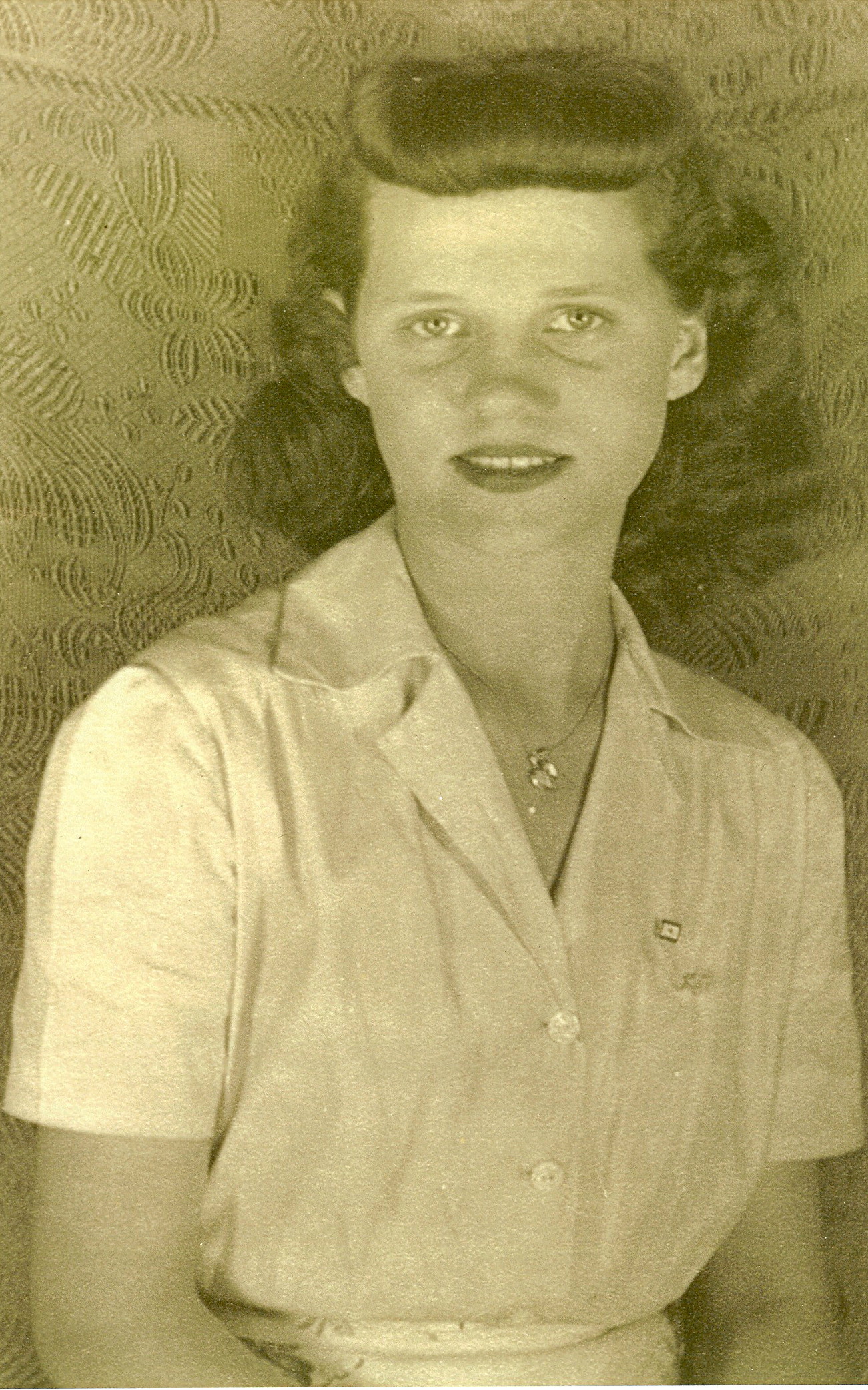
The young couple stayed in touch through letters. Earlene sent Paul a picture that she had made especially for him.

Both Paul and Luther survived the war in Europe. Before leaving Germany they were told they would be shipped to the United States, then would be reassigned for shipment to the Pacific Theater. When the men reached the states, in July 1945, they received a 30 day furlough to visit their families. Paul found his bride on her father’s farm and met her family for the first time.

Paul did not intend to go back to combat. He’d been through too much, seen too much. He vowed he would get lost in the swamp where no one could find him. Unfortunately his father was ill so Paul had to help his mother. He couldn’t hide. Instead, he gained permission to extend his leave. Before he had to report back, the Japanese surrendered.

Paul reported to Ft. Bragg, N. C. and was discharged in November, 1945. Paul and Earlene’s marriage lasted until his death in 1999. They raised five children. Paul’s friend Luther lived nearby. When Luther visited his stories revealed much of what Paul’s children knew of their father’s service because he rarely talked about it.

There were many of these love stories during World War II. Young men and women traveled all over the country and overseas. Workers left their homes for defense plants. The couples met in many ways and places – on the military bases, in USO canteens, through friends, while in transit, etc. Soldiers even developed serious relationships with girls they met overseas where they were stationed or fighting. War brought an urgency to their courtships. Many were short and some of the relationships did not survive after the war. What’s amazing is how many of these marriages not only survived but flourished. They are wonderful stories and I never tire hearing them.

276th Armored Field Artillery Battalion – Part 2

When we last left our hero’s of the 276th Armored Field Artillery Battalion, it was February, 1945, and they had just crossed into Germany from Luxembourg.

I’m a map person. Several years ago I purchased a coffee-table book “US Army Atlas of the European Theater in World War II.” Researching this post I scoured the maps for locations mentioned in the 276th Battalion history and that exercise put some of the distances in perspective. In a straight line from Bastogne, Luxembourg, to Bitburg, Germany, it’s about 30 miles through hilly, heavily wooded terrain with crooked, narrow roads. The defenses of the Siegfried line ran along the German border between the two points. Bitter cold winter weather hindered progress as the Germans retreated behind their “west wall” line of defense. Can you imagine life for the men? Living outdoors, eating when they could, following orders, doing their jobs, fearing the next attack and struggling to survive. The 276th was a few miles southeast of Bastogne at the beginning of January. They did not reach Bitburg until Feb. 28, 1945. Eight long weeks.

From the southern shoulder of the “bulge” in the line, due to the German counter-offensive later known as the Battle of the Bulge, the 276th moved toward the northeast in support of the 80th Infantry Division. On Feb. 7, 1945, the Battalion fired 1,702 rounds in preparation for the 80th attack across the Our River into Germany and against the Siegfried Line. The 276th fired a total of 2,610 rounds that day, more than 325 rounds per gun. After that firing continued at a rate of approximately 1,000 rounds per day as they continued to pound the German fortifications. On Feb. 19-20 the 276th again fired heavily in preparation for another attack by the 80th Division. This time the 276th AFA Battalion crossed the Sauer river into Germany near Cruchten.

During these attacks the 276th for the first time fired a mixture of rounds that consisted of 40% fuze delay, 50% fuze quick and 10% white phosphorus, a chemical that burned through anything and could not be extinguished with water. The combination proved effective against enemy troops and would be used again.

In early March they moved rapidly northward to Koblenz on the Rhine. My father-in-law told of sitting on high ground overlooking the Rhine river and seeing the Ludendorff Bridge at Remagen, north of Koblenz. Although not mentioned in the history, he remembered seeing the bridge and firing across the river to protect the crossing troops. Since it was the only bridge left intact across the Rhine, it had to be the bridge at Remagen. For years he had a print of the bridge hanging in his room.

His buddy in the 276th told a funny story on him years later. While near the Rhine, a young man, drunk on liberated cognac, sat astride the gun barrel when German artillery began firing rockets on their position. He couldn’t get down so he rode out the barrage on the tube. Shells landed so close that the water cans hanging on the gun were shot off, but he didn’t get a scratch. According to my husband, his father didn’t want the story told and tried his best to stop his buddy from telling it in front of his sons. 

At Koblenz the north-east flowing Moselle joins the Rhine. On March 15 the 276th crossed the Moselle with elements of the 4th Armored Division. They continued toward the south-east against stubborn resistance from rear-guard troops and defiant towns. Although the men rarely knew what was going on overall in the war, they knew moving forward meant they were winning and that was always good news.

While the 4th Armored Division diverted south to take Worms, the 276th remained at Oppenheim to support a bridgehead operation by the 5th Division. They crossed the Rhine on a pontoon bridge above Oppenheim on March 24, then reverted back to supporting the 4th Armored Division on their swift advance east to encircle the city of Frankfort. Within days they advanced across northern Bavaria, heading northeast. On April 3 they ended a long road march near the city of Gotha with enemy aircraft and artillery firing on their advance. After an ultimatum Gotha surrendered the next day and the 276th moved south on the road to Ohrdruf.

On April 5th the battalion fired on the city of Ohrdruf against stubborn resistance by the Germans. When the enemy surrendered, the Americans learned why they defended it so stubbornly. Ohrdruf was a sub-camp of Buchenwald – the concentration camp and ‘death factory’ – and the first such camp discovered by the Americans. Although my father-in-law never spoke of it directly, Patton visited the camp and ordered that as many of his men as possible tour the camp as witnesses to the atrocities committed there. More than likely the men of the 276th saw the camp at Ohrdruf and, possibly Buchenwald, since they were in the area when it was discovered. The only time I ever heard my father-in-law say anything about the concentration camps was in the 1990’s when a TV program mentioned that there were people claiming the holocaust never happened. He adamantly insisted that it did happen, but he would say no more.

Reassigned to the 11th Armored Division, the 276th drove southeast from near Suhl  to near Kulmbach by April 12, battling not only Germans but also heavy rains. As part of Task Force Hearn another road march began near Grafenwohr, “site of the largest barracks and training area in central Germany,” and within a week they traveled 150 miles to Grafenau. Their objective was Linz, Austria on the Danube. The German army offered little resistance during this advance.

But, on April 30, the enemy made a stand at Wegscheld. After an all day assault, including heavy fire from the 276th, the 11th Armored Division occupied the demolished town. The battalion fired approximately 1,600 rounds that day, including a 90 round white phosphorous concentration. May 1st the 276 crossed into Austria with the 11th.

On May 2, the 276th received orders to return to supporting the 4th Armored Division near Lalling, Germany. They marched back to the northwest, then on May 3 moved to a ‘rest’ bivouac area near Saldenberg for three days. On the 5th they joined the 4th Armored Division moving east and north into Czechoslovakia toward the city of Strakonice. The Czech’s lined the roads welcoming their liberators.  They were still moving toward Prague when they received word that the German armed forces had surrendered. The war in Europe was over.

Surrendering German troops streamed through the battalion’s camp toward designated assembly areas. On May 10 the 276th motored to Bogen, Germany, where they became part of the military government and oversaw the flow of prisoners into fenced areas for processing to prisoner of war camps.

The joy and relief of victory in Europe was short-lived for the 276th. On May 13 they learned they would be deployed within 30 days to the Pacific Theater, traveling through the United States. On May 16 they participated in a ‘ceremony shoot’ for a group of Russian generals. On June 2 they received orders to move out. The heavy vehicle column traveled across Germany and France by train while the light motor column traveled by road meeting up at Camp Lucky Strike, near Le Havre, France. Here, due to the points system for discharge, members of the battalion with more than 85 points were transferred to the 341st FA Battalion of the 89th Infantry for transport home and discharge.

The remainder of the 276th embarked for the US from Le Havre, France, on July 2, 1945. It was one year to the day from their departure from New York.   By July 11 all had departed Camp Shanks, NY, for home on furloughs. Thankfully, by the time they were to reassemble for redeployment training, the Japanese had surrendered and the war was over.

The 276th Armored Field Artillery Battalion – Part 1

Due to the interest generated by my post about the M7 Priest, I decided to write about  my father-in-law’s unit and their experiences during the war.

The Battalion

The 276th Armored Field Artillery Battalion was in the European Theatre of Operation combat zone for 241 days, from September 1944 until the Germans surrendered in May 1945. They fought in the Battle of Northern France, the Battle of the Rhineland, the Battle of the Bulge, and the Battle for Central Europe. From the first round fired at Andelot, France, (near Nancy) they moved across Europe to near Strakonice, Czechoslovakia, at the war’s end. The battalion’s eighteen guns fired approximately 90,000 rounds in combat and provided support to whoever needed their guns. Thus they supported numerous groups including the French Second Armored Division, the Third Army, the 80th Infantry Division, the 6th Armored Division, the 12th Armored Division, the 9th Armored Division, the 4th Armored Division, the 90th Infantry Division, the 5th Infantry Division, the 26th Infantry Division, and the 11th Armored Division.


The 276th started out in Kansas where they trained as a field artillery battalion. While on maneuvers in Tennessee orders came to reorganize the battalion into an armored field artillery battalion. In January, 1944, they reported to Camp Campbell, Ky., for retraining on M7 track-mounted 105 howitzers.

On June 23 they left for Camp Shanks, New York, where they boarded the SS John Ericsson, set sail on July 1, 1944, and crossed the Atlantic to England. After arriving at Liverpool, they proceeded by train to Lianmartin, Monmouthshire, South Wales, for a thirty-day readying period.

The Campaign in Lorraine

On August 20th the battalion moved to Weymouth, on the south coast, and loaded on LST’s to cross the channel. After landing on Utah Beach in Normandy, the 276th began the motor march across France. By September 10 they reached Joinville, in eastern France near Nancy, where they were assigned to the French Second Armored Division. Here they fired their first combat rounds in the war.

Over the next few days the 276th crossed the Moselle and Meurthe rivers still in support of the French. During September and into October the account of engagements and movements reads like a tour guide of villages in Lorraine. Members of the battalion were killed, wounded and a few were captured. During a short rest the men stayed in French villages where the citizens welcomed them as liberators. From late October through mid-November,  the 276th supported the 6th Armored Division defending Landroff from a strong enemy counter-attack.  Steady rain in November caused muddy roads, traffic jams, hampered operations and generally made life miserable for the men. On December 5 they fired into Germany for the first time.

In early December orders came transferring 10% of the enlisted men, or 48 men, to the infantry.  Assigned to support the 80th Infantry Division, the 276th continued to fight along the German border. But on December 20th orders changed.

Battle of the Bulge

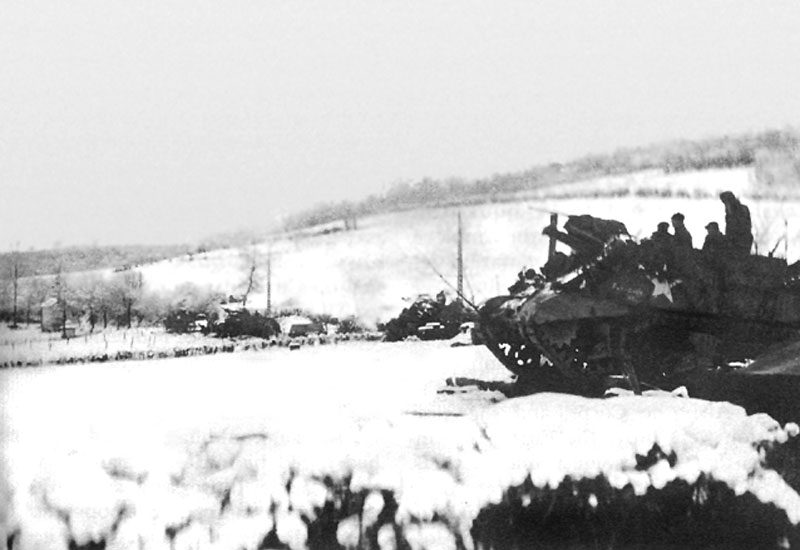
As part of Patton’s Third Army, the 276th journeyed from near Bettviller in easternmost France to the City of Luxembourg in four days, enduring snow, extreme cold, and icy, mountainous roads. This was the famous march in the dead of winter that Third Army made to relieve the US troops surrounded at Bastogne. In Luxembourg the 276th moved further north to engage the enemy along the southern shoulder of the bulge where they spent Christmas of 1944. During this time the weather was extremely cold. They were not allowed to build fires and they had no hot food. My father-in-law said that one night he fell asleep under the gun and when awakened by gunfire he was numb and stiff. Had he not awakened, he would have frozen to death, as many did that winter.

In the movie “Patton” there is a scene where General George S. Patton ordered a chaplain to write a prayer for good weather so that they could attack. This actually happened. The successful results of this prayer impressed Patton so much that he had a copy of it sent to all the men in Third Army. My father-in-law sent it to his mother who gave it to my husband. The prayer is printed on both front and back of a small, thin piece of paper about the size of a baseball card.

In January the 276th still supported the 80th Infantry Division as they fought northward helping the 319th Inf. Regiment repel a strong counter-thrust near Nocher. The battle remained near Heiderscheid until Jan. 18.  when the battalion supported attacks on Dahl and Kaulenbach, Luxembourg. By the end of January the Allies had crushed German offensive and had pushed back the battle lines to roughly where they had been in early December.

In February the battalion hammered the Siegfried Line along the Luxembourg-German border. They established liaison with the 4th Armored Division protecting the flanks of the 80th. Targets for the thousands of rounds fired included German defensive positions with nebelwerfers (rockets called screaming meme’s), mortars, tanks, pill boxes, snipers, infantry, vehicles and gun batteries. They crossed the Sauer river near Cruchten into Germany on February 20. Five days later the 276th received orders transferring them to support of the 4th Armored Division and continued to move further into German territory.

In Part 2 I will continue to recount the experiences of the 276th in the last months of the war in Europe.

Thanks to Teresa Williams for allowing me to use her father’s photos. Her father is Morris I. Grayson, Battery “B”, 276th Armored Field Artillery Battalion. Details were taken from the history of the 276th Armored Field Artillery Battalion compiled by Sgt. Bruce B. Palmer.

The First Women in the Military

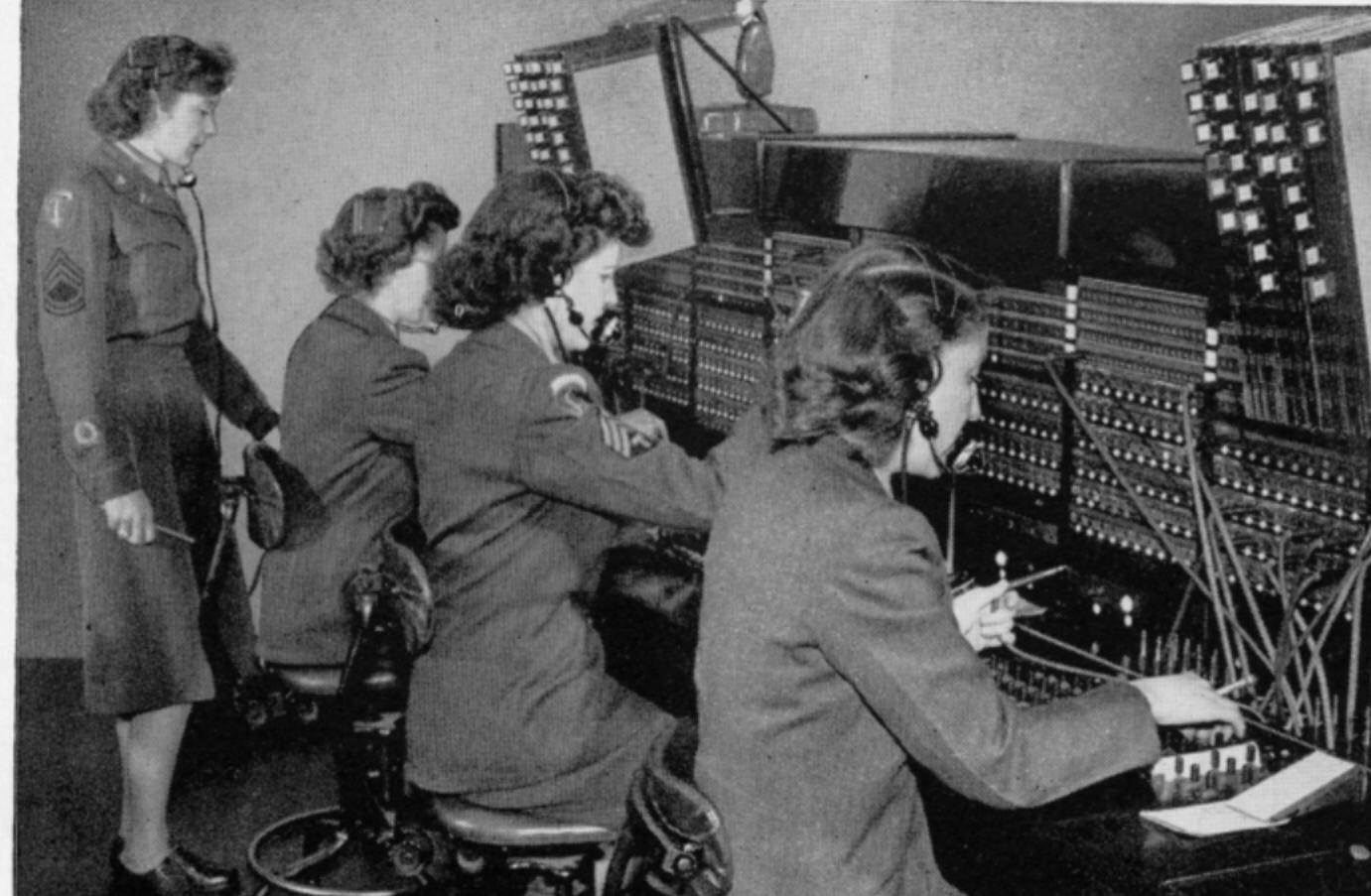
Today most of us know women who have served in the military and many who served overseas in combat. But how many of us know about the first women in the military? And how many know what our mothers and grandmothers did during WWII? Did they serve in the military? Red Cross? Defense industry? During World War II women’s lives changed. The vital role they played, both as civilians and in the military, impacted the outcome of the war and changed how American women viewed themselves.

Women filled the void left by men who either joined or were drafted into the military after Pearl Harbor. Factories converted to wartime production needed workers so, out of necessity, they hired women. Jobs formerly reserved for men opened up for women. Females worked in factories, hospitals, offices, and farms. And some of them joined the military. Of course, it took an act of Congress to allow women into the armed services, but with strong enemies across the Atlantic and Pacific the U. S. needed to utilize all its resources.

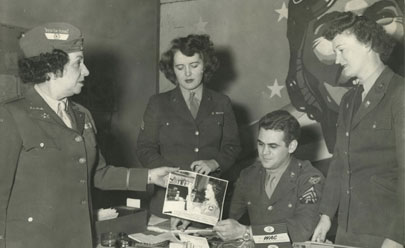
Before 1942 women who supported the military worked as civilians, except for Army Nurses. With Congressional authorization the Navy established the WAVES (Women Accepted for Voluntary Emergency Services) and the Coast Guard SPARS (Semper Paratus – Always Ready) as part of the Department of the Navy. The Army chose to create two “auxiliary” units, the Womens Auxiliary Army Corps (WAAC) and the Womens Airforce Service Pilots (WASP).  These women’s auxiliaries had separate command structures, they were paid less than men, and they had no military benefits like life insurance or veterans medical benefits.  With WAAC’s being sent overseas, the Army recognized the problems and in 1943 the Women’s Army Corps was authorized as an official part of the Regular Army. But the WASP never gained the same status and it was disbanded in December, 1944. Authorization for women in the WAC, WAVES, and SPARS only lasted for the “duration plus six months.” At that time these women’s’ military organizations ceased to exist.

After much political discussion the WAC was reinstated in 1947. Many today may not realize that women remained segregated from the regular Army until 1978. Yes, it was post Vietnam when the separate Women’s Army Corps was abolished and women were integrated into the regular Army.

In the 1940’s many across America opposed women serving in the military. Back then most believed that a woman’s place was in the home. Culturally it was difficult for both men and women to accept. Many female enlistees were accused of being immoral or gay. Some men refused to let their wives, girl friends, daughters or sisters join up. But other families supported and encouraged their young women to do their patriotic duty.

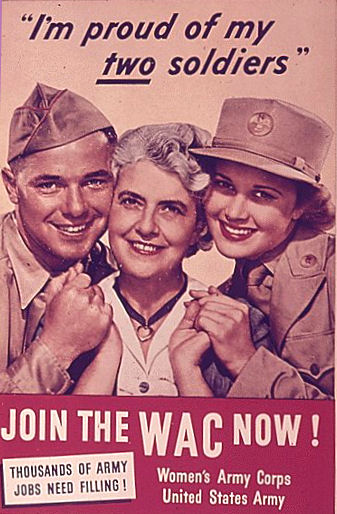
First Lady Eleanor Roosevelt threw her support behind the women who volunteered to serve. The media used advertising to promote images of  women in uniform and Hollywood made movies depicting beautiful starlets serving in the various branches of the armed forces. Thousands of women answered the call.

What was it like for those first female soldiers? Seeing women in uniform was a new experience for everyone. Young ladies donned newly designed, skirted uniforms, little green sear-sucker fatigue dresses for their rigorous physical training and twill jumpsuits or coveralls for heavier work. Girls left home for the first time and found themselves  living in open barracks with no privacy, not even in the shower. They learned to march in step, keeping the seams of their heavy cotton stockings straight. Long hikes carrying heavy packs toughened the most feminine. Failing inspections drew the dreaded gigs and led to extra hours of KP (Kitchen Police) duty. In basic training male instructors taught them military regulations and procedures until enough women were trained and available to take over. Many specialized training courses took place on college campuses where the military  commandeered both space and teachers. Others trained alongside the men. Unlike modern female soldiers, the WAC’s of WWII were considered non-combatants so they were not trained to shoot or handle weapons.

In researching my latest work-in-progress I read some memoirs that give  fascinating, first- hand accounts of WAC’s wartime experiences. “Call of Duty, A Montana Girl in World War II” by Grace Porter Miller, “Mollie’s War” by Mollie Weinstein Schaffer, and “One Woman’s War, Letters Home from the Women’s Army Corp 1944-1946” by Anne Bosanko Green give three diverse accounts of Army life during the war.

And to answer my other question, my mother did clerical work as a civilian at several military bases as she followed my father from one post to another. My dad and two of his three brothers served in the Army, while the third worked in a defense plant. My mother’s sisters also worked in defense plants. So no WAC’s or WAVES in my immediate family. But my sister’s mother-in-law served in the WAC’s. The woman was quite a character and I wish I had had the opportunity to talk to her about her military service and her experiences during World War II before she died.  The “Greatest Generation,” both men and women, are quickly dying off and they take with them the stories of their service to their country so many years ago.

Today’s female soldiers, as well as all American women who work outside the home, benefit from what these brave women did during World War II. They stepped up and proved that they were capable of doing almost any job. I believe that the women’s movement had its origins in the mothers who, after the war, told their daughters they could do any thing they wanted to do. The women of the Greatest Generation believed it because of what they did in helping to win the war.

B-17 or B-24?

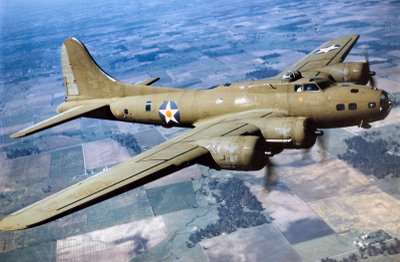
During WWII, the two bombers that carried the load in European air war for the Americans were the B-17 Flying Fortress and the B-24 Liberator. In my latest work-in-progress I am trying to decide which airplane my hero/navigator would have flown.  My first thought was to use the B-17 since it seemed more glamorous, but with more research about both planes, I found that the Liberator was quite a plane, too. After all, Jimmy Stewart flew the B-24. How’s that for glamor?

Boeing B-17 Flying Fortress
Almost everyone has heard of the iconic B-17. When we think of bombers of that era, images come to mind of planes shot full  of holes, with sections blown off and engines not functioning, yet landing safely on air fields in England. Those images are usually of B-17’s. Its crews loved the Flying Fortress because it took lots of damage and still brought them home.

Memphis Belle

Anyone remember the Memphis Belle? It was the first bomber that finished the required 25 missions in 1943. (Mission requirements were increased to 30 and then to 35 in 1944)  Major William Wyler, the famous director and movie maker, as part of the First Motion Picture Unit of the US Army Air Forces, directed a film depicting the final flight of the Memphis Belle. The footage became the documentary “The Memphis Belle: A Story of a Flying Fortress.”  As a morale booster for the Army and the folks back home, the crew, the plane and the movie toured the US selling war bonds and recruiting flyers for the Army Air Force. In 1990, Hollywood made a movie about that last flight, “The Memphis Belle.” Both films depict the lives of bomber crews in WWII and are well worth seeing.

Consolidated B-24 Liberator
But what about the B-24 Liberator? In researching accounts of WWII  bomber crew members, I discovered that Jimmy Stewart (Yes! the movie star) flew combat missions over Europe in B-24’s. Starr Smith wrote in “Jimmy Stewart Bomber Pilot”about Jimmy enlisting before the war even started. He earned his wings and became an instructor flying B-17’s. Apparently the military feared Stewart would be  harmed if sent overseas, which frustrated Stewart. Finally in 1943 his wish for combat duty came true with his assignment to the 445th Bomber Group, part of the Eighth Air Force.  He quickly learned to fly the B-24 and within months received orders for England. Captain Stewart commanded the 703rd Squadron of the 445th Bomber Group and regularly flew combat missions. Promoted to Major and transferred to the 453rd Bomber Group as Operations Officer, Stewart continued to fly combat missions, including flying on D-Day (June 6, 1944). In July 1944, Lt. Colonel Stewart’s transfer to Second Combat Wing Headquarters severely limited his combat flying.  In his twenty-three months overseas, Stewart flew 20 combat missions over Europe, all in B-24 Liberators.

Jimmy Stewart
Data for a head to head comparison of the B-17 and the B-24 can be found on several websites for anyone who likes statistics.  One interesting difference I found was that the B-17 was slower than the B-24.  The difference in speed meant that the two bombers could not fly in the same formations, although they were often sent on the same missions.  But the B-17 could fly at higher altitudes. There is no doubt that the Flying Fortress crews and the Liberator crews each believed their plane the best and maintained an ongoing, good-natured rivalry.

Some believe that the B-17 got better press during the war and many thought it a better looking plane. It is definitely the one most people associate with WWII.

So, which plane will I use in my book? I haven’t decided. But I’m leaning toward the B-24 because it’s less known and because I have found some good books to use as reference material. Among them are:  “A Reason To Live” by John Harold Robinson who flew as a gunner and engineer on a B-24; “Lucky Penny’s Tail” by Gregory J. Matenkoski recounting the story of Edmund Survilla, a tail gunner on a B-24; and “Jimmy Stewart Bomber Pilot” by Starr Smith.

For additional research, I plan to travel to Savannah, Georgia, to visit the Mighty Eighth Air Force Museum sometime in the near future. This museum should give me additional details and insight into the WWII air war.  Wouldn’t I love to take a ride on one of those old planes? I’m watching for an opportunity.

Coastal Artillery’s Demise During WWII

The concept of coastal artillery has been around for a long time. With the invention of the cannon centuries ago, countries along the sea realized they could defend their shores from invasion by positioning guns at key locations. Important harbors and port cities became the primary location for defensive forts armed with artillery pieces.

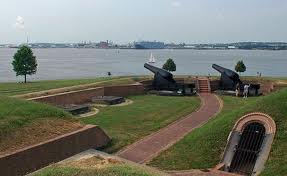
Think about our early history. During the War of 1812 Fort McHenry defended Baltimore and we sing about it in our national anthem. At the tip of Manhattan in Battery Park the guns of Castle Clinton protected New York City during the same war. Even Fort Sumter’s guns were intended to defend Charleston from invaders, not fire on the Federal troops to start the Civil War.

Guns at Ft. McHenry

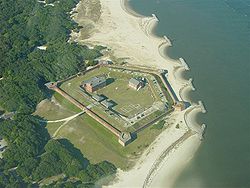
During the Civil War, locations like Fort Clinch on Amelia Island, Florida, and Fort Morgan in Mobile Bay, Alabama, controlled important shipping lanes. Confederates and Federals fought to occupy these key positions.

Fort Clinch, Amelia Island, Florida

Hitler’s Atlantic Wall was a classic and extensive example of coastal artillery used to defend a coastline. Fortifications built along occupied Europe’s Atlantic Coast created a defensive wall against the Allied invasion that both sides knew was inevitable.

German Gun Emplacement on French Coast

During WWII the Coastal Artillery was also a vital part of this America’s defense. After the attack on Pearl Harbor, the US expected the Japanese to attack the west coast. And German U-Boats were expected to attack US ports on the Atlantic and Gulf coasts. The Army updated the already existing forts and gun emplacements and added anti-aircraft guns.

Battery Davis 16 in gun at San Francisco

My father’s service in the coastal artillery from 1942 to 1943 spurred me to learn more about this now-defunct branch of the military.  Stationed at the entrance to San Francisco bay, he manned huge guns aimed at the surrounding ocean to protect the city and the bay.

The Presidio of San Francisco, a military post dating back to the Spanish and Mexican days, became the headquarters for defense of the west coast. Its location on the San Francisco side of the Golden Gate bridge oversaw the narrow entrance to the bay. An extensive network of fortifications, gun emplacements, anti-aircraft guns and observation posts located on the opposite side, in what is now part of Golden Gate National Recreation Area, also protected the critical passage.

6in_Rifled_Gun_No_9
Disappearing Rifle at Battery Chamberlin, Presidio, San Francisco

The American military expected the Japanese to attempt to get into San Francisco Bay and wreak havoc so they developed defenses to prevent intrusion. The Navy laid minefields and stretched a huge anti-submarine net across the inner harbor. Navy tug boats would open and close it for authorized vessels. In 1939 a German submarine penetrated Scapa Flow, the main British naval base, and sank a battleship, so it was no far-fetched idea.

During WWII San Francisco was the busiest port on the west coast. My father recalled looking out over the harbor and seeing thousands of ships, both military and civilian. He expressed pride in protecting this vital port. He told of manning the big guns, the blackouts along the coast and walking patrol on the beaches. The threat of saboteurs sneaking ashore was very real in those days.

As the war progressed US forces destroyed much of the Japanese and German navies, thus reducing the threat to our coast line. Recapturing islands such as Midway and Wake made airborne attacks less likely. By 1944 the military realized that neither the Japanese nor the Germans could mount an invasion or a serious attack on the US. With manpower needed elsewhere in Europe and the Pacific, coastal artillery units were stripped and soldiers were reassigned to the field artillery or the infantry. That usually meant overseas duty for the men. It also spelled the end of the Coastal Artillery.

My father was on the list to be transferred overseas when his request to join a newly formed medical rehabilitation unit was approved. While his brother fought in the Pacific under MacArthur recapturing the Philippines and other islands, my father remained stateside and helped wounded veterans regain their health and strength. (The story of this unique rehab unit will be the subject of another post.)

Advances in the technology of warfare, through airplanes and missiles, caused the demise of the coastal artillery. After WWII with the advent of the Cold War, the Strategic Air Command (SAC) and inter-continental ballistic missiles (ICBM’s) took over the nation’s defense. And coastal artillery faded into history. A few of the locations remain as local or national parks and historic sites. Visit some of these unique sites for a stroll into the past.

It’s Not A Tank – M7 Priest

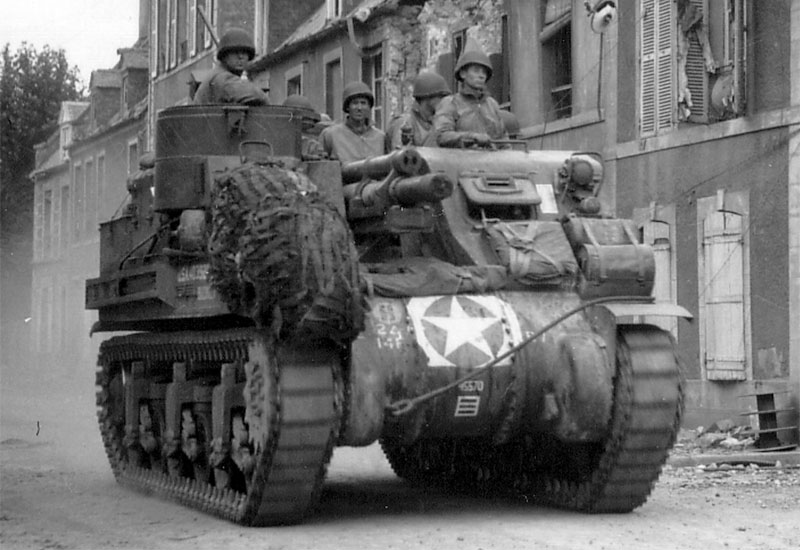
To the average person, this vehicle looks like a tank, but it’s not. It’s an artillery piece. One key difference is the main gun, a 105 mm Howitzer. Compare this to a 75 mm gun on a Sherman tank. Also on the M7 the crew is riding on top of the vehicle in the open unlike a tank crew tucked away safely inside the tank. So the men on the M7 had no armor plating protecting them in combat. But the track gave this gun the mobility to advance alongside tanks and infantry into the thick of battle.

My father-in-law served on an M7 in the 276th Armored Field Artillery Battalion. When his son asked him what he did in WWII, the veteran told him he was on a tank, rather than trying to explain to him about the track-mounted artillery piece.  So as a boy my husband proudly proclaimed to his friends that his father served on a tank with Patton. As he grew older my husband learned more about the war and he continued to ask his father questions. Although reluctant to talk about his WWII experiences, the ex-GI explained that the vehicle he manned was actually an M7 105 mm Self Propelled Gun, also called an M7 Priest. (The British dubbed it “Priest” due to the .50 caliber machine gun mounted in a drum-like ring on the front that resembled a priest’s pulpit.)

The former soldier rarely relayed stories about the war. When he did, he told of experiences during the Battle of the Bulge, Remagen Bridge and the invasion of Germany as part of Patton’s Third Army. GI’s on the front didn’t know the big picture. He said that as long as they were moving, they figured things were going good.

Reading the history of the 276th AFA BN put their role in the war in perspective. I learned that these artillery pieces were assigned to whatever front or division needed their support. So, like other artillery units, the 276th was not included in the combat records of any particular division, which makes research for specific details much more difficult. Fortunately we have a copy of the official account printed immediately after the war and given to each soldier in the unit.

M7 Priest in Michigan

Last summer while visiting relatives in Michigan, my brother-in-law took us to a VFW outside Flint where an M7 Priest is on display. For the first time my husband saw, in person, a gun like his father’s. Having served in an armored unit himself, my husband has been around many tanks, but seeing and touching this vehicle thrilled him. He even climbed up on top in the rain to gain perspective on his Dad’s experience riding atop the powerful gun. That day we both made a connection to his Dad and his experiences during the war, experiences that changed a 19-year-old forever.

Dad’s Gun

If you are interested in the history of action aboard the M7 during the second world war, read “Longneck, A History of the 274th AFA BN” by Jack K. Morrison or “Payoff Artillery – WWII” by Frank H. Armstrong. Both these veterans give fascinating accounts of their service in these unique units.