November 11, 2024, is Veterans Day, an American holiday to honor all those who have served in the U.S. military. But not all of the former service men and women are in the United States. Some are buried overseas near where they fell in service of our country.
Cambridge American Military Cemetery
The American Battle Monuments Commission operates and maintains 26 permanent American Military Cemeteries and 26 American Military Monuments around the world. More than 200,000 deceased Americans from World War I, World War II, Korea and Vietnam rest in these beautifully maintained cemeteries where veterans are visited by many of their fellow Americans, family members and comrades. Our cemeteries and monuments are located in 17 different countries. Citizens of these countries treat these hallowed places with honor and respect. They still remember what our men and women did for their countries so many years ago.
On Veterans Day 2024 Ceremonies will be held at 22 of these American Military Cemeteries to honor our fallen veterans. These ceremonies are held every year on Veterans Day and Memorial Day.
It is amazing to me that people from around the world will be honoring American veterans this Veterans Day. To see a list of the locations and times of the ABMC Veterans Day ceremonies click HERE.
For more information about the American Battle Monuments Commission, click HERE. If you are traveling to any of these countries, consider visiting one of the cemeteries or monuments.
My interest in railroads started when I was a child. The train whistle would wake me up at 2:00 am just enough to think “there goes the train” and, then I would go back to sleep. The railroad ran through the middle of the small town where I grew up so trains were a common sight. I remember regularly scheduled trains carrying passengers and freight (and the mail) came through town twice a day, one going east and one going west – the one at 2 am and another at about 2 pm. A big water tank stood by the tracks as a reminder of the water needed by the steam trains that had come through our little town before the conversion to diesel. My parents told stories about how many trains came through during World War II, carrying war supplies, equipment and soldiers. By my day, there weren’t that many, but I treasure my memories of seeing the cars rolling by, hearing the whistle, and riding the trains.
When the Japanese attacked Pearl Harbor in 1941, the railroads had already started gearing up due to the increased production of war materials being shipped to England on the Lend-Lease program. Remembering World War I when shipping became chaotic and the Federal government had to take over operating the trains, the many rail companies decided to get organized so they could efficiently handle the transport of war goods and personnel. They worked together to insure vital transportation ran smoothly. Although engines, rail cars, and track were owned by many different railroad companies, every company’s cars traveled over every company’s tracks.
The allocation of available materials and manpower limited the number of locomotives and rail cars that could be produced during the war, and, with very few diesel engines already in service, existing steam engines pulled the load.
This video shows much more about the role of the railroads during World War II than I could ever write. It will take you back to the 1940’s and wartime and all the vital industries that used the railroads.
Moving an Army unit from one base to another was a major undertaking. This video shows the move of one unit. Notice the troop cars. These were specially designed and manufactured by Pullman to transport large numbers of military personnel with seats for day-time and bunks for night-time.
Although the railroads were booming during World War II, in the 50’s the railroads role in transporting freight and passengers diminished. The new interstates allowed big trucks to transport freight. Personal automobiles became the preferred mode of travel rather than taking the train.
For those of us old enough to remember, watching the plume of smoke from a steam locomotive evokes times long gone. It is easy for us to forget that without these steam trains winning the Second World War would have been difficult, if not impossible.
These days everyone has heard of PTSD (Post Traumatic Stress Disorder). The symptoms have been around since ancient times but had never defined as a diagnosis until 1980 when the DSM-III first introduced the term and diagnosis derived from studies of Vietnam War veterans. Although the first diagnosis of PTSD was based on combat experiences, the disorder can come from any traumatic event. Yet the disorder occurs more often in combat veterans, whether officially diagnosed or not.
During World War I the military used the term “shell shock” to describe men who came off the battle field unable to function normally. These men had spent too much time in the trenches with artillery shells bursting around them and machine gun fire rattling their brains. The only treatment was rest and hope that the men would eventually return to normal. Many never did.
By the time World War II started, the medical field had advanced in all areas, including in treatment of mental health problems. The term for PTSD used in WWII was “Combat Fatigue” or “Battle Fatigue.” If a soldier, sailor, airman or marine showed symptoms, his commanding officer sent him off the battlefield to a medical facility close to the front lines, such as the battalion aid station or clearing station, like any other casualty. Treatment consisted of medication to knock the soldier out for a couple of days. Once the patient woke up from his medically induced sleep, he usually felt better, maybe not good enough to return to duty, but better. The thinking in the medical community was to keep the man in the field, close enough to the fighting that he could hear the artillery fire, rather than sending him far back to a Rest and Recreation Center. With time to rest in a safe place, most of the men could return to duty. Often they didn’t return to their combat unit but to some other type duty.
Servicemen whose Combat Fatigue was so bad that they didn’t bounce back were sent to a General Hospital in the Theater of Operations and assigned to a neuropsychiatric ward. There the men received psychiatric care and, eventually, returned to the states. Depending on the severity of the symptoms and the response to treatment, the servicemen might be kept in the hospital for a while and then discharged. Severe cases remained hospitalized for longer periods of time. Forty percent (40%) of all medial discharges during World War II were due to Combat Fatigue.
Many other servicemen who returned from the war showed symptoms of PTSD but were never diagnosed. Families noticed the changes in them but the military offered no help. Some untreated sufferers, unable to return to some form of normal life, turned to alcohol, drugs or violence. Many of these ended up in jail or, worse, committed suicide.
If you want more information about PTSD/Combat Fatigue during WWII, I have included some links to interesting articles below:
Let There Be Light, a documentary film by John Huston about soldiers suffering from psychiatric wounds and their treatment. It was intended to help the public understand the men returning from war. This film was suppressed by the military until the 1980’s because it was deemed controversial and demoralizing.
Scarred Dreams is a Historical Romance set during WWII. If you like history, a wholesome romance and happy endings, this is the book for you.
In 1944, a German artillery shell destroyed Milt Greenlee’s future in professional baseball. His hideously scarred face and useless arm require him to relearn and recondition. But no amount of rehab will restore his looks or his self-confidence. There’s no chance a “cripple” like him could catch the eye of the stunning Nurse McEwen.
Army Nurse, Annie McEwen dreams her voice will take her far away from her hateful, overbearing father. She hopes Milt, a patient who fought in Sicily, might be the one who can help her find closure with the death of her cousin.
As their attraction grows, how can their relationship survive Annie’s fears and Milt’s secret?
Books make great Christmas gifts. Someone you know would love Scarred Dreams.
To me a spooky movie is not a scary movie or a horror movie. I can’t watch those. But I do enjoy something spooky. So in honor of Halloween and to continue my movie theme, I have chosen my favorite spooky movie to share with you. (No top five this time.)
The Uninvited (1944)
Ray Milland, Ruth Hussey, Donald Crisp and Gail Russell star in this spooky film mislabeled as a horror story. And no, it is not about World War II, though it was made during the war. You could say the setting plays a major character. An abandoned house built on the cliffs of Cornwall, England, overlooking the sea, provides an atmosphere filled with mystery and danger.
Milland and Hussey, brother and sister, purchase the house and learn it has a past. Soon after moving in, the two experience strange and frightening happenings such as unexpected chills and a woman sobbing in the night. Russell is drawn to the house where she lived as a child and where her mother died even though her grandfather has forbidden her to go there. To discover the identity of the sobbing woman Milland and Hussey hold a séance. As a result Russell becomes possessed by the spirt or ghost. At the end all is explained but it’s a dangerous journey to solve the mystery and reveal the truth.
Another spooky movie that I like is Rebecca (1940). It stars Lawrence Olivier and Joan Fontaine and is directed by Alfred Hitchcock. Again, the house or mansion overlooking the sea sets the stage for mysterious goings-on. They call it a romantic psychological thriller. It is fascinating but it’s not quite as spooky as the ghost in The Uninvited.
To learn more about my writing, sign up for my newsletter by clicking this LINK. Don’t worry, I won’t bombard you with emails.
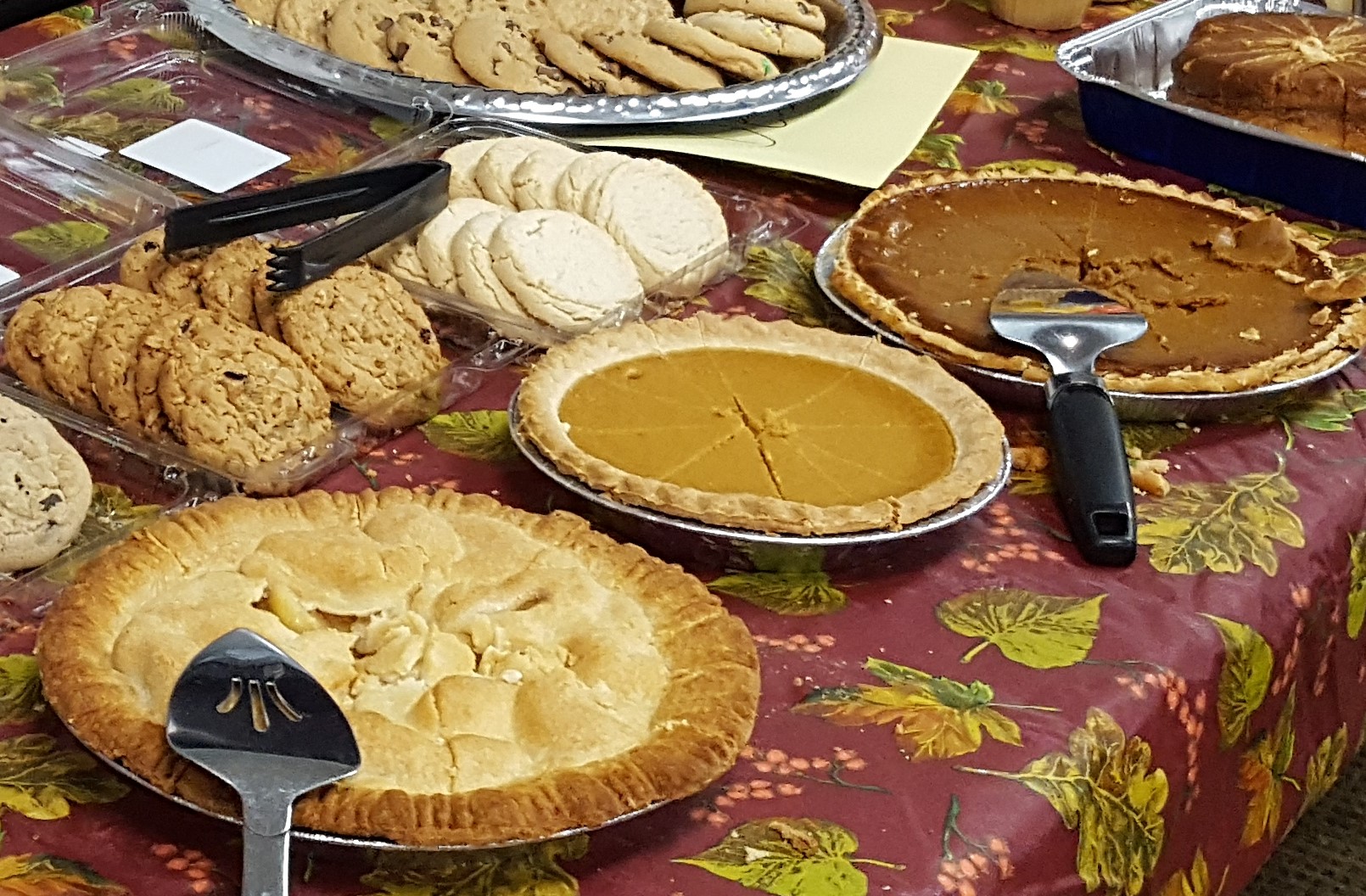
With Thanksgiving only a few days away, many of us are planning our menus. An important part of the annual feast is the dessert and that means pies. Pumpkin pie, as well as apple, pecan, and even mince meat, are absolutely essential for the meal to be complete. So have any of you ever wondered how the homemaker managed to provide those pies for their World War II Thanksgiving table without using sugar?
No, the Thanksgiving celebration was not cancelled due to the war. It continued both at home and overseas, but with rationing of many food stuffs, it became more difficult to plan the menu. Desserts were especially hard because of sugar rationing, which continued even after the war ended. Cooks had to get creative. They often substituted honey and molasses for sugar. In my novel, Kitty’s War, Kitty’s mother made pies for her boarding house tenants using honey. In my story the family bee hives insured a steady supply of the sweet substance. The inspiration for this detail came from a family story about my grandfather keeping bees.
The Office of Price Administration put out a documentary film explaining the need for sugar rationing. I had no idea that sugar was used in so many ways during the war. Watch the video for an education on life during World War II and how our elders dealt with sugar rationing.
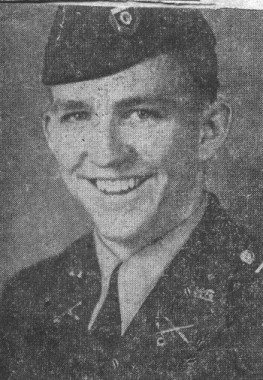
Colonel Ray Hosley Smith, originally of Shinglehouse, PA, retired in 1973 after an illustrious career in the U. S. Army. At his death in 2013, he was buried in Arlington National Cemetery. Col. Smith started his military service as a Second Lieutenant in the 276th Armored Field Artillery Battalion during WWII.
What do I know about Col. Ray H. Smith’s memoirs? Some years ago a fellow veteran of the 276th AFA, Pvt. Clinton H. Nichols, copied some of the pages of Col. Smith’s memoirs. For some unknown reason Nichols only copied a portion of Chapter 3 which starts with the beginning of World War II, Smith’s entry into the Army and early training. The copied pages end with the account of the long drive north to Luxembourg with Patton’s Third Army in December 1944, the beginning of the Battle of the Bulge. Recently, Clinton Nichol’s niece sent me these memoir pages.
The first hand account of Lt. Smith as the Reconnaissance Officer for Battery “B” tells a vivid, personal story of the 276th’s first months of combat in France. But this is only the beginning of the 276th experience in WWII. They went on to fight through the terrible winter of 1944-45 pushing the Germans back to the lines before the famous Ardennes offensive. They crossed the Siegfried Line into Germany, fought their way to and across the Rhine and continued to combat enemy resistance within Germany. The 276th reached Czechoslovakia before the German surrender May 8, 1945.
The 276th’s WWII story did not end with the German surrender. Their orders sent them back across the Atlantic to train for the planned invasion of Japan. The Japanese surrender, brought on by the atomic bombs, precipitated the inactivation of the 276th Armored Field Artillery Battalion in October, 1945.
Lt. Ray H. Smith decided to remain in the Army and make it his career. He went on to fight in Korea and eventually in Vietnam earning medals and awards along the way. Read Col. Smith’s obituary here. Or at Find a Grave.
A group of family members of the 276th Armored Field Artillery Battalion have continued to share what information and pictures they have about the battalion and its veterans. We would love to read the remainder of Col Smith’s memoirs.
Please contact me via the Contact page on this website if you have a copy of Col. Smith’s memoirs or if you know where we might find a copy. If you are able to share the memoirs with us, you will have our undying gratitude.



 Barbara Whitaker