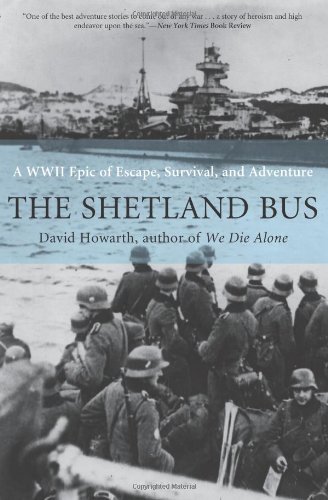
Odds are that most of you have never heard of the Shetland Bus. I knew nothing about it until I watched an episode of Shetland (BBC/BRITBOX), the TV series created based on the series of novels by Ann Cleeves set in Shetland, Scotland. The World War II operation piqued my interest. After researching it online, I found an excellent account of the secret operations during the early years of WWII in the book “The Shetland Bus” by David Howarth.
The Germans invaded Norway in 1940 and quickly gained control of the country. The King of Norway and his family, as well as many Norwegians, escaped to England via Shetland. They came on Norwegian fishing boats across the North Sea, landing in Shetland since it is Britain’s closest point to Norway. Norway and Shetland have always had strong ties. In the past Shetland was governed by Norway before becoming part of Scotland.

In 1940 British intelligence set up an operation using Shetland as a base for sending agents and weapons to Norway utilizing Norwegian fishing boats and their crews. These boats blended in with other fishing boats along the Norwegian coast, could operate in shallow water and narrow passageways, and their crews knew the Norwegian coast like the back of their hand. Darkness also provided cover so they took advantage of the long nights in the wintertime and avoided the long days of summer. Navigating the North Sea in winter meant sailing through the frequent storms, some with hurricane force winds. Experienced sailors and the sturdy Norwegian boats made the trips seem routine, but not without danger.
David Horwarth, author of the book “The Shetland Bus,” arrived in Shetland as a British Naval Officer in the spring of 1941. His superior, Major L. H. Mitchell of the British Army, had begun setting up the unorthodox base. The book is Horwarth’s account of his time in Shetland and his dealings with the Norwegian fishermen, their boats, and his management of personnel, supplies and equipment.
The book includes stories of crossing the North Sea in bad weather with waves crashing over the deck, of attacks by German airplanes and dodging bullets that bore holes into the small crafts , of plans going wrong requiring ingenuity by Norwegian fishermen to escape capture, and of the Norwegian refugees shivering in the cold on their way back to Shetland. Although Howarth never sailed to Norway himself, he reviewed the logs and interviewed the crews after every voyage. His accounts are fascinating and vividly realistic.

Although the British intelligence ran the base in Shetland, it was largely a civilian operation with volunteer Norwegian crews and a relaxed atmosphere encouraged by the few British Officers involved. Despite several boats and crew lost either to the Germans or to the sea, the operation succeeded. New boats were assigned and new crew members from among the refugees volunteered. Eventually, losses drove the higher-ups to seek additional resources. In the summer of 1943, help came from an unlikely source, the Americans. The U.S. Navy had developed a small, fast submarine chaser that fit the bill for what was needed for the trips between Shetland and Norway. Three were sent to Shetland. The Norwegian crews quickly learned to operate and maintain these sleek, new vessels. The submarine chasers started making runs to Norway in the fall of 1943. Their safer, faster crossings helped to achieve the goals of British intelligence without so much loss of life.
If you are curious about World War II in Norway, the Norwegian resistance, and the restrictions placed on the population of Norway by the Germans, I highly recommend this book. Even if you are only interested in the Norwegian fishing boats and how they navigated the North Sea, this book is for you. It is detailed and a joy to read.
 Barbara Whitaker