“Oh Say Can You See”

Francis Scott Key wrote the lyrics to “The Star Spangled Banner” in 1814 while watching the British bombard Fort McHenry. As the sun rose, he could see the American flag flying amid the explosions. That vision inspired him to write the poem “Defense of Fort McHenry.” Later the poem was set to music composed by John Stafford Smith and became “The Star Spangled Banner.” In 1931 “The Star Spangled Banner” be came the National Anthem of the United States.

Those not familiar with our nation’s history may think that the anthem was composed during the American Revolution. Not so. The battle of Fort McHenry took place during the War of 1812 when the British tried to reestablish their hold over the young United States. They shanghaied Americans to serve on ships in the Royal Navy, restricted our trade and supported Native Americans in their effort to prevent our western expansion. We held on to our independence despite the British raiding the new capital in Washington D.C. and burning the buildings, including the White House.

You will probably hear the National Anthem over the 4th of July weekend or at the beginning of a ball game. When you hear it, think of the bombing of Fort McHenry. And when you watch the fireworks in the sky think of the “rockets red glare, the bombs bursting in air.” And through it all, the “broad stripes and bright stars” waved over the land of the free.

The Little Piper Cub Goes To War

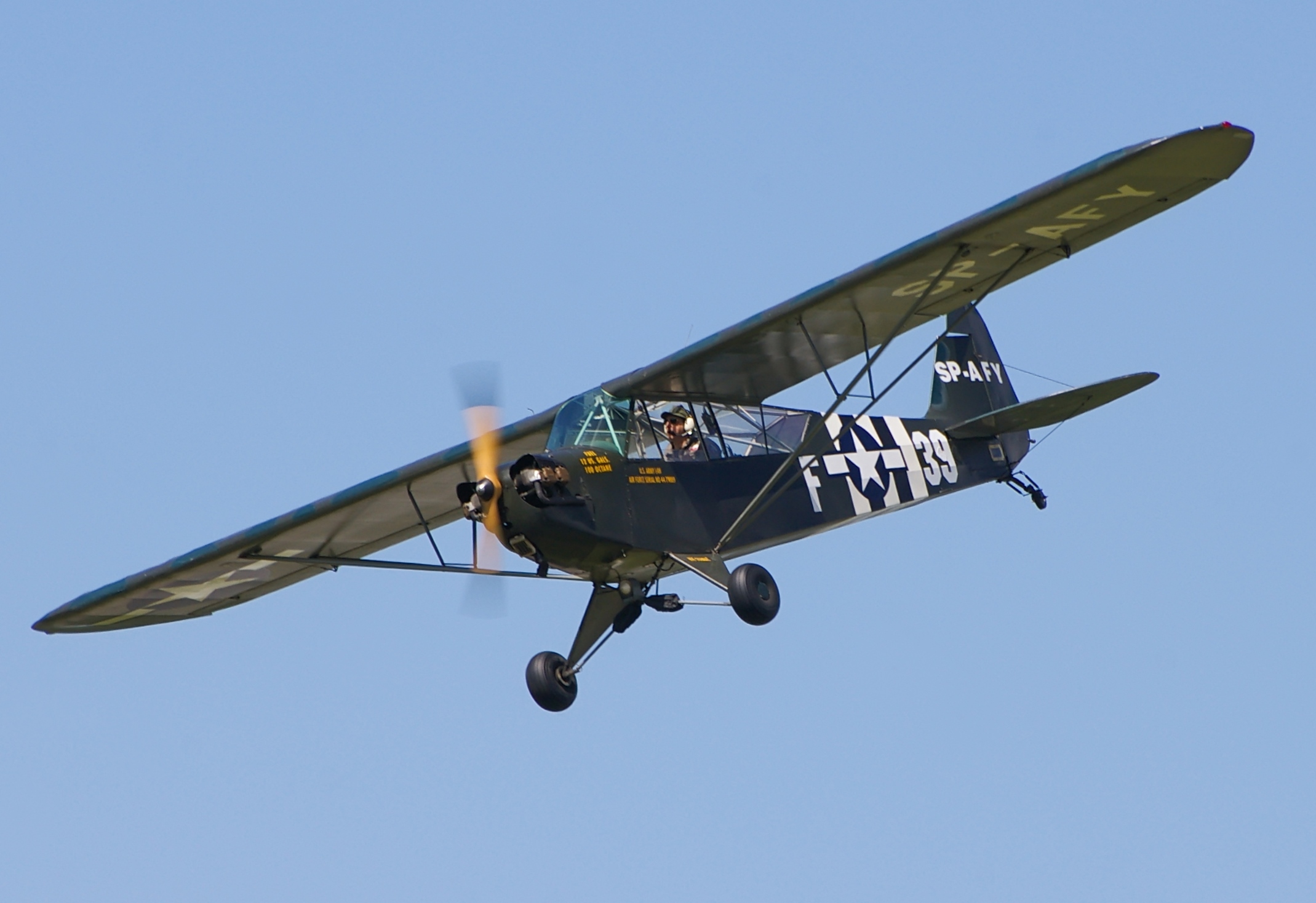
By Łukasz Golowanow & Maciek Hypś, Konflikty.pl - commons file, CC BY-SA 4.0, https://commons.wikimedia.org/w/index.php?curid=68294900
By Łukasz Golowanow & Maciek Hypś, Konflikty.pl – commons file, CC BY-SA 4.0, https://commons.wikimedia.org/w/index.php?curid=68294900

Have you ever flown in a small plane? Not substantial enough for me. I’d rather be in a bigger plane like an airliner or a B-17 bomber. Yet the iconic Piper Cub made history in both military and civilian aviation.

Imagine flying in a tiny Piper Cub over enemy lines scouting for artillery targets. That’s what happened during World War II. The small plane was perfect for the job. It flew fairly slow yet it was highly maneuverable. It could fly as low as the tree-tops and had good visibility for observing enemy positions. An observer could ride behind the pilot calculating coordinates and radioing the artillery with instructions. They would even stick around to make sure the artillery shells hit their target and adjust fire if necessary.

But when the enemy started shooting at the Piper Cub, the little plane had no defense – no fire power, no armor protection, nothing. The pilot might have brought along a Tommy gun or a pistol, but that was it. Not enough to really defend itself. All the pilot could do was maneuver and hope they didn’t get hit. And all it took was a rifle or machine gun round in just the right spot and down it went. Then you had a pilot and observer, if they survived the crash, either taken prisoner or evading capture until they could make their way back to friendly forces.

Before the war, the Piper Cub was primarily used for training. Most of the pilots in the U.S. Military learned to fly in a Piper Cub. Once the military saw how useful it could be, they designated it the L-4 Grasshopper and production ramped up. The military used it for things like carrying messages, ferrying high ranking officers, transporting wounded and training new pilots. By far, its value for reconnaissance, observation and as a spotter for the artillery exceeded the other uses. Additionally, it could land or take off on a short section of road or a small field. The L-4 Grasshopper was used in North Africa, Europe, and in the Pacific Theater where the Navy, as well as the Army, took advantage of its many uses.

DAYTON, Ohio — Piper L-4 “Grasshopper” at the National Museum of the United States Air Force. (U.S. Air Force photo)

In Europe, the Germans learned to fear the Piper Cub more than any other airplane. When they saw this little plane flying over, they knew it would be followed by an artillery barrage. Unlike the Germans or the Japanese, the American artillery could concentrate fire from many different artillery battalions due to their system of communication. And depending on the target, the Americans could bring to bear an enormous amount of fire power. Also, the American artillery shells had “Proximity Fuses.” These could be set for the shell to explode above ground to expand its effect, set to explode on impact or set to delay the explosion, tricking the enemy into believing it was a dud. No wonder the enemy feared the American artillery and the little Piper Cub.

I first learned about the Piper Cub and its use for artillery observation while researching the 276th Armored Field Artillery Battalion. The Battalion had two liaison pilots assigned to them along with two Piper Cubs. The pilots must have rotated because several were listed in the 276th History as receiving Air Medals and many with Oak Leaf Clusters meaning they received the medal multiple times. The pilots were 1st Lieutenant Charles R. Lindgren, 1st Lieutenant Dwight W. Jewett, 1st Lieutenant John B. Blazak, 1st Lieutenant Ward R. Price, Master Sergeant John C. Taylor, Jr. , and 1st Lieutenant Frank W. Zachman who also received the Silver Star. No doubt these men earned their medals for the perilous missions they carried out.

To learn more about the “Little” Piper Cub, watch the videos below.

Impacts of Weather During WWII

Most of us have been carefully watching the weather all winter. Whether it was snow and freezing temperatures dipping deep into the south, the series of snow/sleet/ice events across the mid-west and northeast or the winds that fueled wild fires on the west coast, the weather impacts everything we do.

The weather also impacted the fighting during World War II. Forecasting helped with planning, but it didn’t change the weather. All the armed forces had to endure the weather while trying to achieve their goals.

The most famous military operation impacted by the weather was the D-Day invasion of Europe. Originally planned for June 5, 1944, to take advantage of the favorable tides, bad weather made chances of success unlikely. General Eisenhower, Supreme Commander, ordered a one day delay. Why only one day? The weather forecasters told him that there would be a break in the storm which would allow the invasion to take place. The Germans didn’t know about the possible break in the weather due to their limited weather information so they did not expect the invasion at that time. .

Battle of the Bulge, winter 1944-45

Another famous battle impacted by the weather was the Battle of the Bulge. Imagine being a soldier fighting in snow and freezing conditions. In the winter of 1944-45 Hitler’s attack surprised the Allies. Both sides fought in freezing temperatures and feet of snow. Ice and snow made roads near impassible. Armored vehicles slid on the ice, despite their tracks. Thick clouds blanketed the area preventing any air operations.

At the center of the “bulge” sat Bastogne, a cross-roads town the Germans needed. As the Germans surrounded the town and its American defenders, the weather prevented resupply of food and ammunition. Despite the freezing, overcast conditions and lack of air support, the Americans held out. When the sky finally cleared, Allied planes dropped much needed supplies and the siege was over.

Weather, both over England and over Europe, impacted operations of the Eighth Air Force in England. Bad weather over England grounded them and over Europe blocked their view of their planned targets.

Let’s not forget the war in the Pacific. The battle for the Aleutian Islands, part of the American territory of Alaska, lasted from June, 1942, when the Japanese captured Attu and Kiska islands, until August, 1943, when the Americans and Canadians recaptured them. Severe storms halted operations on the sea, in the air and on the ground. Fog and low clouds interfered with air navigation, targeting and reconnaissance. Sudden powerful wind gusts called “Williwaws” disrupted air operations. Rough seas and storms impacted naval operations for both sides, affecting resupply and troop transport. The rough terrain and terrible weather made land operations very difficult. The severe cold caused many casualties from frost bite and pneumonia.

American troops hauling supplies through Jarmin Pass on Attu May, 1943. Public Domain, https://commons.wikimedia.org/w/index.php?curid=88696

During the Allied invasion of the Philippines in December 1944, Typhoon Cobra almost destroyed Admiral Halsey’s task force. Halsey had incorrect information so did not attempt to evade the storm. The typhoon strengthened and headed straight toward the Americans. The 140 mph winds and accompanying waves wrecked havoc on the Navy. Three destroyers sank and nine other ships were badly damaged. Waves swept airplanes from the decks of aircraft carriers. A total of 790 sailors died.

During Typhoon Cobra. By US Navy – USS Cowpens (CVL-25) – The Mighty Moo Copyright Information, Public Domain, https://commons.wikimedia.org/w/index.php?curid=3656661

War causes havoc with untold damage and loss of lives. Fighting the weather makes it worse. Although we have progressed in weather forecasting, the weather will continue to impact our lives.

Veterans Day and the American Battle Monuments Commission

November 11, 2024, is Veterans Day, an American holiday to honor all those who have served in the U.S. military. But not all of the former service men and women are in the United States. Some are buried overseas near where they fell in service of our country.

Cambridge American Military Cemetery

The American Battle Monuments Commission operates and maintains 26 permanent American Military Cemeteries and 26 American Military Monuments around the world. More than 200,000 deceased Americans from World War I, World War II, Korea and Vietnam rest in these beautifully maintained cemeteries where veterans are visited by many of their fellow Americans, family members and comrades. Our cemeteries and monuments are located in 17 different countries. Citizens of these countries treat these hallowed places with honor and respect. They still remember what our men and women did for their countries so many years ago.

On Veterans Day 2024 Ceremonies will be held at 22 of these American Military Cemeteries to honor our fallen veterans. These ceremonies are held every year on Veterans Day and Memorial Day.

It is amazing to me that people from around the world will be honoring American veterans this Veterans Day. To see a list of the locations and times of the ABMC Veterans Day ceremonies click HERE.

For more information about the American Battle Monuments Commission, click HERE. If you are traveling to any of these countries, consider visiting one of the cemeteries or monuments.

Have a happy and safe Veterans Day!

The Shetland Bus

Version 1.0.0

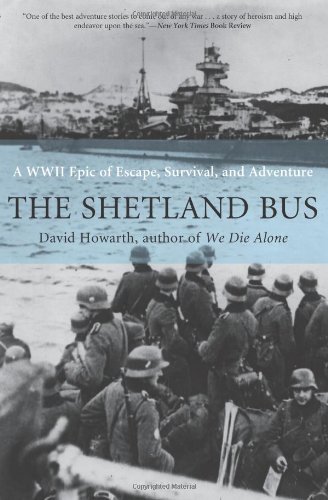
Odds are that most of you have never heard of the Shetland Bus. I knew nothing about it until I watched an episode of Shetland (BBC/BRITBOX), the TV series created based on the series of novels by Ann Cleeves set in Shetland, Scotland. The World War II operation piqued my interest. After researching it online, I found an excellent account of the secret operations during the early years of WWII in the book “The Shetland Bus” by David Howarth.

The Germans invaded Norway in 1940 and quickly gained control of the country. The King of Norway and his family, as well as many Norwegians, escaped to England via Shetland. They came on Norwegian fishing boats across the North Sea, landing in Shetland since it is Britain’s closest point to Norway. Norway and Shetland have always had strong ties. In the past Shetland was governed by Norway before becoming part of Scotland.

In 1940 British intelligence set up an operation using Shetland as a base for sending agents and weapons to Norway utilizing Norwegian fishing boats and their crews. These boats blended in with other fishing boats along the Norwegian coast, could operate in shallow water and narrow passageways, and their crews knew the Norwegian coast like the back of their hand. Darkness also provided cover so they took advantage of the long nights in the wintertime and avoided the long days of summer. Navigating the North Sea in winter meant sailing through the frequent storms, some with hurricane force winds. Experienced sailors and the sturdy Norwegian boats made the trips seem routine, but not without danger.

David Horwarth, author of the book “The Shetland Bus,” arrived in Shetland as a British Naval Officer in the spring of 1941. His superior, Major L. H. Mitchell of the British Army, had begun setting up the unorthodox base. The book is Horwarth’s account of his time in Shetland and his dealings with the Norwegian fishermen, their boats, and his management of personnel, supplies and equipment.

The book includes stories of crossing the North Sea in bad weather with waves crashing over the deck, of attacks by German airplanes and dodging bullets that bore holes into the small crafts , of plans going wrong requiring ingenuity by Norwegian fishermen to escape capture, and of the Norwegian refugees shivering in the cold on their way back to Shetland. Although Howarth never sailed to Norway himself, he reviewed the logs and interviewed the crews after every voyage. His accounts are fascinating and vividly realistic.

Although the British intelligence ran the base in Shetland, it was largely a civilian operation with volunteer Norwegian crews and a relaxed atmosphere encouraged by the few British Officers involved. Despite several boats and crew lost either to the Germans or to the sea, the operation succeeded. New boats were assigned and new crew members from among the refugees volunteered. Eventually, losses drove the higher-ups to seek additional resources. In the summer of 1943, help came from an unlikely source, the Americans. The U.S. Navy had developed a small, fast submarine chaser that fit the bill for what was needed for the trips between Shetland and Norway. Three were sent to Shetland. The Norwegian crews quickly learned to operate and maintain these sleek, new vessels. The submarine chasers started making runs to Norway in the fall of 1943. Their safer, faster crossings helped to achieve the goals of British intelligence without so much loss of life.

If you are curious about World War II in Norway, the Norwegian resistance, and the restrictions placed on the population of Norway by the Germans, I highly recommend this book. Even if you are only interested in the Norwegian fishing boats and how they navigated the North Sea, this book is for you. It is detailed and a joy to read.

Build A Highway Where? To Alaska!

You want to build a highway through Canada to Alaska? Why? That was the question in the 1920’s and 30’s when the highway was first proposed. Few people lived in the area and the economic impact didn’t justify the cost. Needless to say, there was little interest in such an enormous project.

By the time World War II started the Americans acknowledged the strategic military importance of a land route from the lower forty-eight states to the U.S. Territory of Alaska. If Japan invaded Alaska and/or blockaded the ports, there needed to be another way to get men and supplies to Alaska to defend the American territory closest to the Japanese homeland.

The U.S. Corps of Engineers was assigned the task of building the road which was officially started in March, 1942, when seven engineering regiments arrived in Dawson Creek, Canada. The railroad ended at Dawson Creek so this was designated the starting point for the Alaska Highway. Three of the seven regiments consisted of African-American soldiers and the other four regiments consisted of white soldiers. At that time, the U.S. Armed Forces were segregated so these regiments were kept separate. About 10,000 men were assigned to building the highway.

The engineers plowed through the Canadian wilderness following only trails. They had to adapt to the climate and learn how to keep their equipment running in the cold weather. The men lived in tents so conditions were not ideal for anyone.

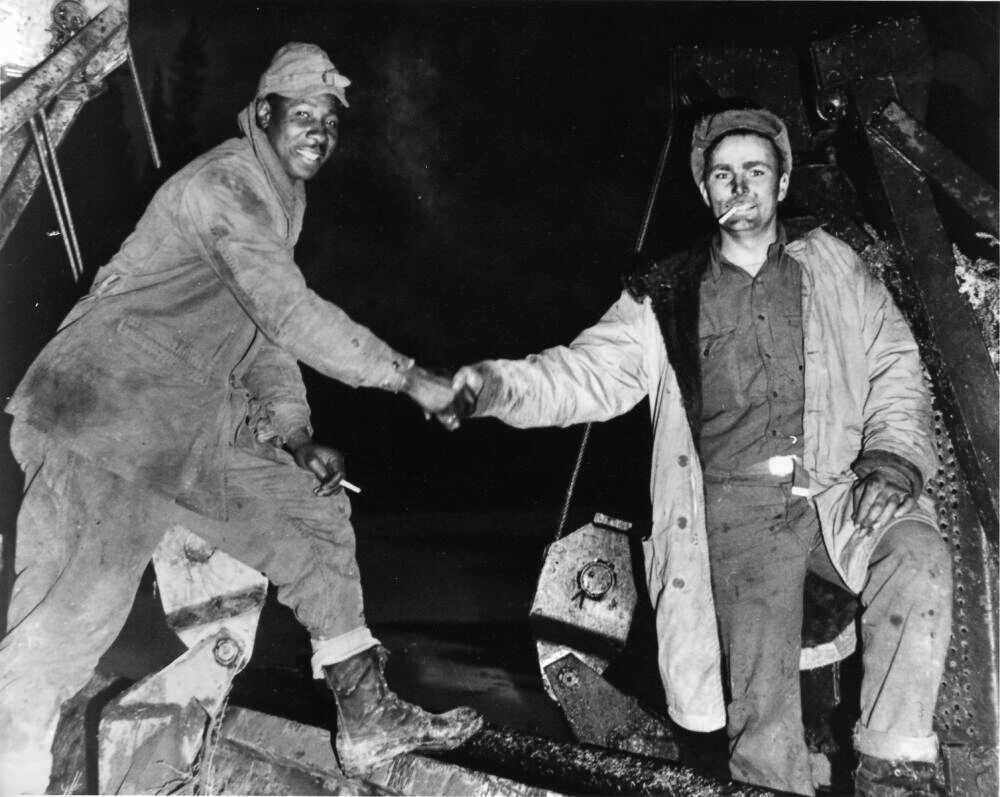
Work proceeded in opposite directions from designated points along the route of the highway. At one point, an African-American regiment worked in one direction toward a white regiment. The iconic picture above shows the representative from the 97th Engineers Regiment shaking hands with the representative of the 18th Engineers at the point where they met at Beaver Creek, Yukon Territory, Canada. The meeting, on October 25, 1942, completed the last section of the road. It had taken only eight months to build a 1500 mile road through the wilderness of Canada and Alaska.

For more information you can follow this link to a PBS article about building the Alaska Highway and this link to another PBS article about the men who built the highway.

Watch the video for a visual account of building the Alaska Highway. These color images vividly show the terrain the engineers faced, as well as their hard work and dedication to this vital war project.

If you are still interested and want even more information about the Alaska Highway, watch this longer, more detailed documentary.

Railroads and WWII

My interest in railroads started when I was a child. The train whistle would wake me up at 2:00 am just enough to think “there goes the train” and, then I would go back to sleep. The railroad ran through the middle of the small town where I grew up so trains were a common sight. I remember regularly scheduled trains carrying passengers and freight (and the mail) came through town twice a day, one going east and one going west – the one at 2 am and another at about 2 pm. A big water tank stood by the tracks as a reminder of the water needed by the steam trains that had come through our little town before the conversion to diesel. My parents told stories about how many trains came through during World War II, carrying war supplies, equipment and soldiers. By my day, there weren’t that many, but I treasure my memories of seeing the cars rolling by, hearing the whistle, and riding the trains.

When the Japanese attacked Pearl Harbor in 1941, the railroads had already started gearing up due to the increased production of war materials being shipped to England on the Lend-Lease program. Remembering World War I when shipping became chaotic and the Federal government had to take over operating the trains, the many rail companies decided to get organized so they could efficiently handle the transport of war goods and personnel. They worked together to insure vital transportation ran smoothly. Although engines, rail cars, and track were owned by many different railroad companies, every company’s cars traveled over every company’s tracks.

The allocation of available materials and manpower limited the number of locomotives and rail cars that could be produced during the war, and, with very few diesel engines already in service, existing steam engines pulled the load.

This video shows much more about the role of the railroads during World War II than I could ever write. It will take you back to the 1940’s and wartime and all the vital industries that used the railroads.

Moving an Army unit from one base to another was a major undertaking. This video shows the move of one unit. Notice the troop cars. These were specially designed and manufactured by Pullman to transport large numbers of military personnel with seats for day-time and bunks for night-time.

Although the railroads were booming during World War II, in the 50’s the railroads role in transporting freight and passengers diminished. The new interstates allowed big trucks to transport freight. Personal automobiles became the preferred mode of travel rather than taking the train.

For those of us old enough to remember, watching the plume of smoke from a steam locomotive evokes times long gone. It is easy for us to forget that without these steam trains winning the Second World War would have been difficult, if not impossible.

Visit my website at https://barbarawhitaker.com/

Entertaining the Troops in WWII

The soldiers sat on the ground as close together as possible. Behind the sitting throng, men stood several deep vying for position. They talked and joked among themselves as they anxiously waited. The crowd had anticipated this special occasion for days. A USO show had come from the states all the way out here just to entertain them, the lucky ones off the front lines for a few days rest.

The band on the makeshift stage played the introductory music. Someone came up to the microphone and enthusiastically introduced Bob Hope, the famous comedian, movie and radio star. When Hope came on stage, the crowd went wild with applause, whistles, and shouts. Hope reveled in the reception and bowed to thank everyone. Finally, he held up his arms to settle them down. A string of jokes followed. The audience laughed and clapped. Then he introduced a beautiful, well-known singer, Frances Langford. Again the boys went wild. The band started up and Frances began to sing an old, familiar tune that quieted the audience as it took them back to happier times.

Could you imagine being far from home, fighting a war, in fear for your life and a troupe of famous entertainers appeared to perform for you? At a time when Bob Hope’s radio show was number one in the U.S. and Frances Langford was a popular recording star, they took time from their successful careers to travel into dangerous territory to bring laughter and joy to service personnel. Hope’s tours included musicians, comedians, magicians, actors, singers and always beautiful women like Dorothy Lamour and Marlene Dietrich. Bob Hope’s shows went to North Africa, Italy, Europe and the South Pacific. These shows began Hope’s lifelong commitment to entertaining service men and women wherever they were stationed around the world.

Watch this history of Bob Hope’s history entertaining the troops.

Many more entertainers, both famous and not so famous, trekked to bases at home and around the world doing their bit for the war effort, mostly with the USO.

The USO, United Service Organizations, created the USO Camp Shows, Inc. in October 1941 to meet the live entertainment needs of the military. It was divided into four circuits to provide live entertainment for different areas. Victory and Blue Circuits entertained the state-side military. The Hospital Circuit entertained the wounded in military hospitals while the Foxhole Circuit traveled overseas. All kinds of entertainers were recruited to join these circuits throughout the war.

Dinah Shore entertains troops in France in August 1944. Photo Credit USO

The list of entertainers who performed for the USO Camp Shows, Inc. would go on and on. Every famous film actor, radio performer (TV didn’t exist then), singing and recording star, and Broadway stage performer took part. Less famous entertainers went to smaller venues with next to no publicity. These famous and not-so-famous entertainers staved off the boredom and homesickness of innumerable military personnel.

The tradition of providing the American military with live entertainment continues today. We hear about singers, actors, comedians and other celebrities entertaining our troops, such as Jon Stewart, Scarlet Johanssen, Trace Adkins, The Chain Smokers, and so many others. Bob Hope may be gone but the tradition he started carries on today.

Honoring Veterans In Our Family

Thanks to all the men and women who have served our country in the military.

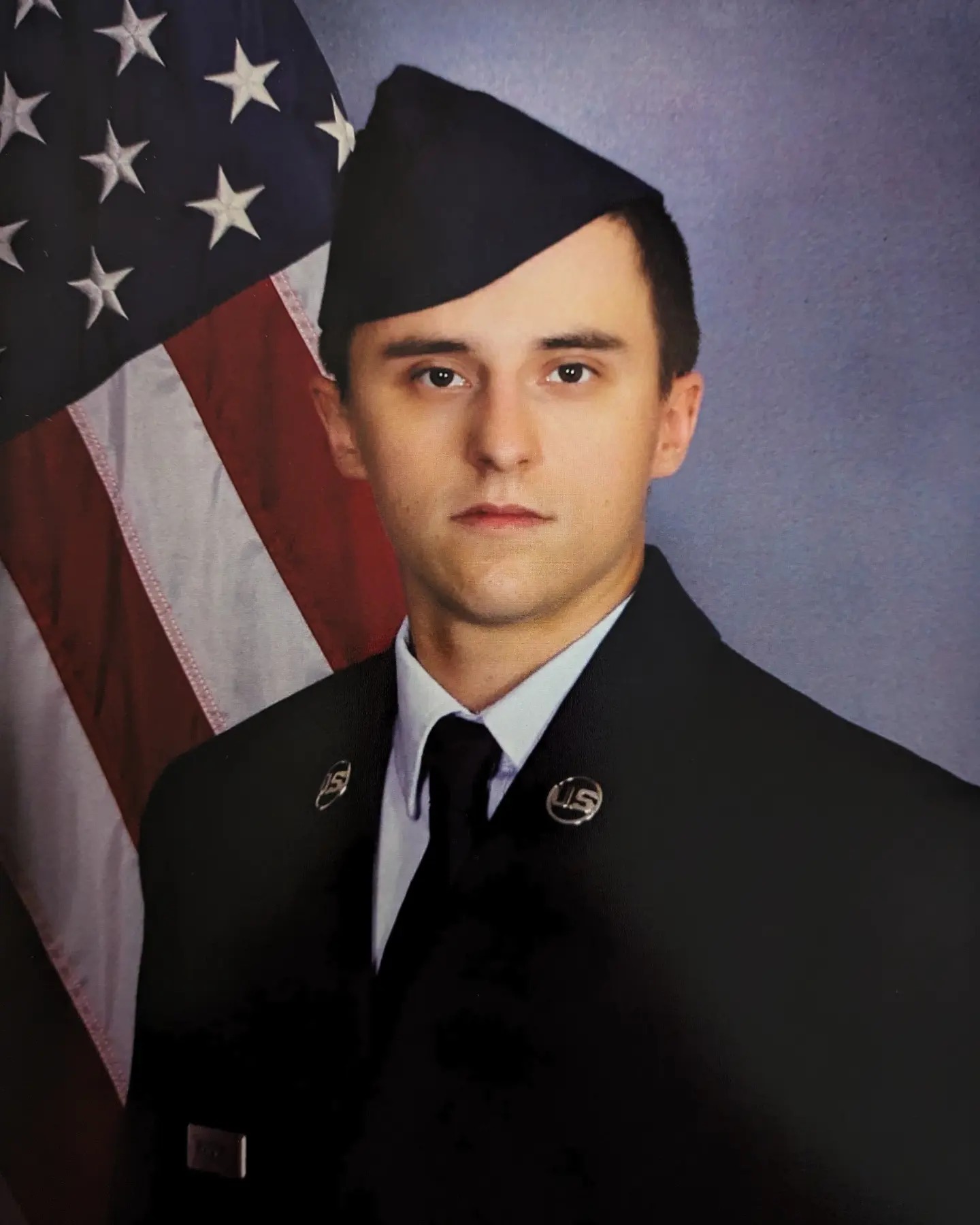
The newest Veteran in our family is our grandson, Ethan Whitaker, who joined the Tennessee Air National Guard. Airman First Class Ethan R. Whitaker is currently in training. We are very proud of Ethan.

Both of Ethan’s grandfathers served in the military.

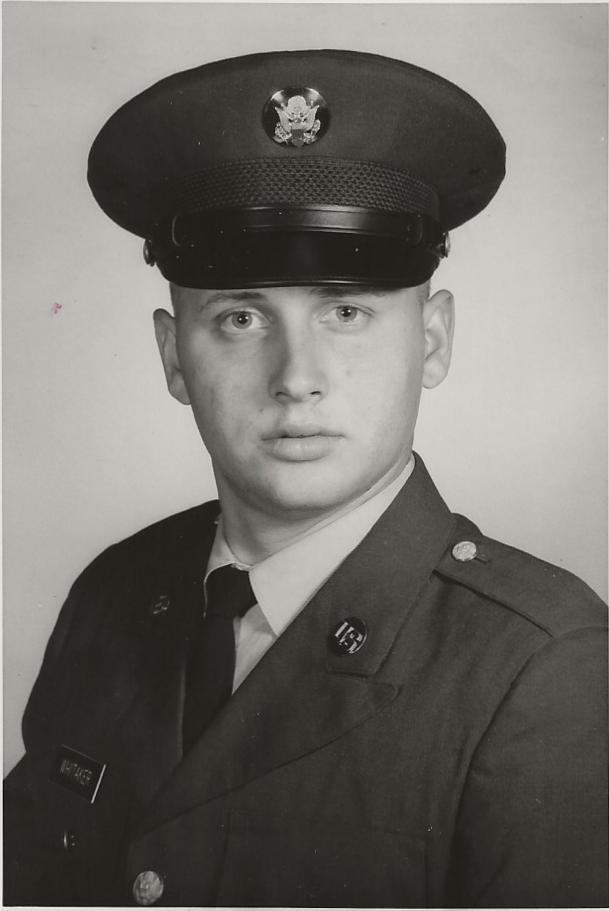
His fraternal grandfather, George Pat Whitaker, served in the Tennessee Army National Guard. Pat’s brother, Dwight Whitaker, also served in the Tennessee Army National Guard, but I don’t have a picture of Dwight.

Ethan’s maternal grandfather, Robert Elam, served in the U.S. Navy.

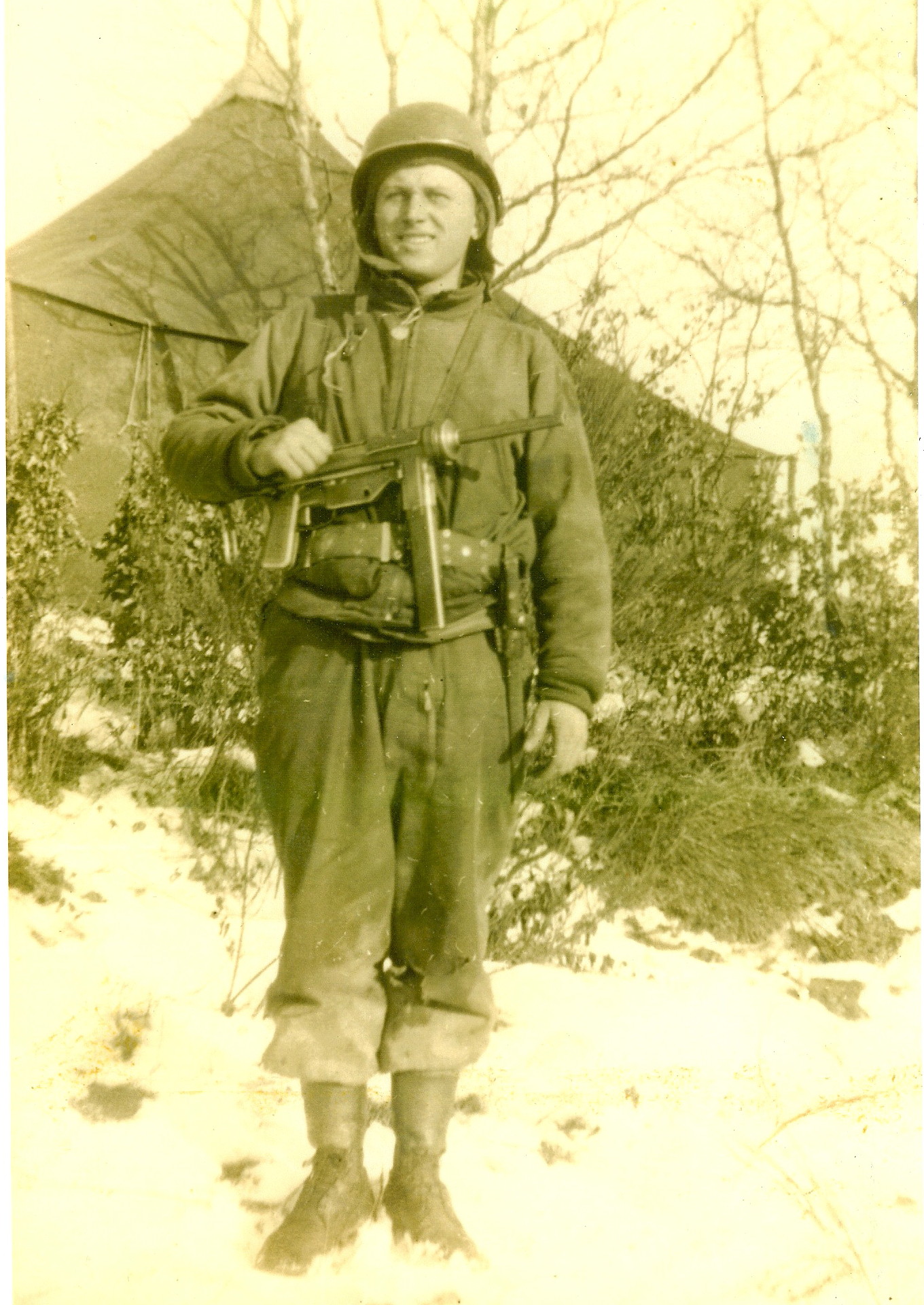
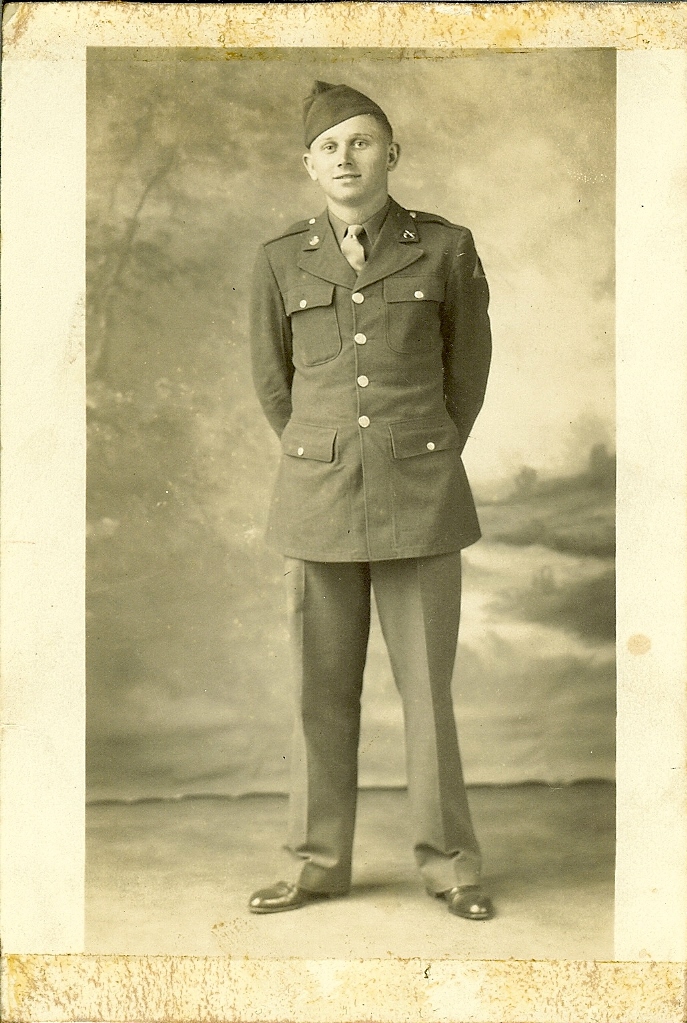
Ethan’s father’s grandfather, Dewey Paul Whitaker, served in the U.S. Army during World War II.

Ethan’s Father’s other grandfather, Vernon R. Knight, also served in the U.S. Army during World War II.

Vernon R. Knight received an award from the American Legion for his service to veterans.

Several other family members served in the military during World War II.

D. T. (Boots) Knight – Served in the U.S. Army

Training may have been fun for a while. Later “Boots” fought in New Guinea and the Philippines.

Roland Roby – Served in the U.S. Army

William R. Boone – Served in the U.S. Army

Eldred Grady Knight – Served in the U.S. Army Air Corps.

John T. Boone – Served in the U.S. Navy. No picture available.

Web Mitchum – Served in the U. S. Army. No picture available.

Relatives who served in the military during World War I.

Malthie Whitaker – Served in the U.S. Army

Most of the Veterans listed here have passed away. Never the less, we will remember their service and their sacrifices on this Veterans Day.

Movies about WWII Returning Veterans

In my latest novel, Scarred Dreams, the hero’s significant combat injuries bring him back to a hospital in the U.S. As you can imagine his initial reaction to becoming a disabled veteran is anger, followed by a sense of uselessness. Today we would treat him for anxiety, depression, maybe even PTSD, as he deals with his new reality. For the hero’s character, I drew inspiration from many sources including movies about WWII returning veterans coping with the after effects of their combat experiences.

The most famous of these movies is “The Best Years of Our Lives” (1946) which tells the stories of three servicemen returning to their hometown after the war. One of the three, a sailor, has lost his hands and has learned to use hooks for replacements. Though the other two, a soldier and an airman, were not wounded, they struggle to adjust to civilian life after their combat experiences. Becoming friends, the men help each other get through the adjustment.

There are two other, lesser known films focused on veterans who were wounded in some way or had difficulty returning to civilian life.

Theatrical poster. Released by United Artists.

“The Men” (1950), starring Marlon Brando, takes place primarily in a paraplegic ward in a veteran’s hospital. One of many men who have lost the use of their legs, Brando’s character’s bitterness and anger prevent him from making the necessary changes to adapt to his new life. The physical therapists give him exercises to strengthen his upper body, yet he refuses to cooperate. He doesn’t want to go out into the world in a wheelchair and he refuses to see his pre-war girlfriend. Eventually, the other men in the ward bring him around. He allows his girlfriend to visit and even takes her out. Reality slams him hard and he must work his way back to acceptance of the permanence of his injuries. Only he can make the adjustments required to build a new life.

Theatrical Poster. Released by RKO Pictures

Another good film about returning servicemen is “Till the End of Time” (1946). The three main characters are portrayed by Robert Mitchum, Guy Madison and Bill Williams. Mitchum’s character received a head injury and as a result has a metal plate in his head and suffers headaches. Guy Madison was just out of school when he enlisted. He can’t return to being his parents teenage son. He has to find his way to a new life. Dorothy McGuire plays his love interest. Williams’ character, a former Marine, lost both his legs. Before the war he had been a boxer. Now he refuses to get out of bed and use his artificial legs. These three veterans try to help each other. As I watched this movie, I couldn’t help feeling for these men with their physical struggles and their struggles with memories of the horror of combat.

Even if you are not a history buff, if you have a person in your life who has returned from combat overseas, these movies will give you some insight into what they are going through. War is war, whether it is eighty years ago in World War II or thirty years ago in the Gulf War or more recently in Afghanistan. War takes a toll on the ones who fight and the ones who participate in other ways, such as treating the wounded.

Sign up for my newsletter by clicking HERE.

Follow my blog by filling in your email in the right-hand column and clicking on the FOLLOW button.